Constitution Optional
Some may wonder why 304 would elect to have so many articles about the past on our website. The answer is that most people are ignorant (meaning uninformed, NOT stupid) about our labor history, not having been exposed to it in school or at home. This has left a gap in the public consciencesness of the many complex and unexplained ways social and political attitudes and trends can affect working people in real time.
Regardless of who you voted for, it’s undeniable that the 2016 election will go down as one of the most controversial in American history. So many allegations among so many unpopular candidates left us with an electorate and country with deep philosophical and social differences.
Media bias was one charge leveled by both campaigns against the other periodically throughout the race. The media took a beating, even literally, in trying to cover and convey each candidate’s platform.
Freedom of the Press is one of the most fundamental rights that our founding fathers agreed was important in making us a just and moral society. Over the years, this right has taken everything from potshots to downright sieges in one party or the other attempting to muzzle the opposition.
One successful suppression of opposition happened in Huntington, WV, on May 9th, 1912. A newspaper office was raided by militiamen, on the orders of then West Virginia Governor Henry Hatfield. Under the direction of Major Tom Davis, U.S. Troops laid waist to the printing company’s presses, typesettings, as well as any printed material already produced by the printer.
The staff of the printing company were placed under arrest, then the Sherriff was ordered to turn his prisoners over to the military, who were then hauled to jail in Charleston. They were held without due process of law, and never charged.
The miltary then proceeded to Editor-in- Chief Wyatt Henry Thompson’s private residence and, over the objections of the his wife and even the Sheriff, proceeded to ramsack the home and remove many private letters and correspondence without any type of search warrants or writs.
You would think something like this would be unthinkable in a Democratic society based on law and justice.
The business the printing company was engaged in was printing a pro-labor, pro-union newspaper, and also serving the printing needs of the local unions that were trying to organize in the area.
The bottom line is; while many politicians try to incite fear and ignite rage in the voting public, the only times that the rights of Americans have been directly attacked has been during times of labor and racial strife. This is why we, as union members, must realize that LABOR RIGHTS ARE CIVIL RIGHTS.
Rifles are still occasionally found buried in the soil of southern West Virginia, left by the miners who dared to march against the corrupt Sheriff of Logan County, Don Chafin, during the Battle of Blair Mountain. They left their rifles buried in the forest because they knew that the militia, who were called out by the governor, but, like the good Sheriff, were working with the forces of the coal operators and would immediately confiscate the weapons as soon as they walked off the mountain (so much for the 2nd Amendment).
 Truth is, our country’s sacred and much heralded Constitution was as much help to workers of the early 20th century, as a suitcase would be to a gorilla. Illegal arrests, kangaroo military courts, and even murder of men, women, and children were the norm for coal field families of West Virginia. Ruthless coal operators evicted families with small children out of their barely habitable homes and into the wilderness to die of starvation, disease, and exposure in tents pitched at the back of the hollows.
As if life hadn’t been hard enough, the coal barons did everything they could to make it even harder on the workers who dared to try and improve the miserable state of a hopeless way of life that seemed to consume the health and lives of all who toiled deep in the mines.
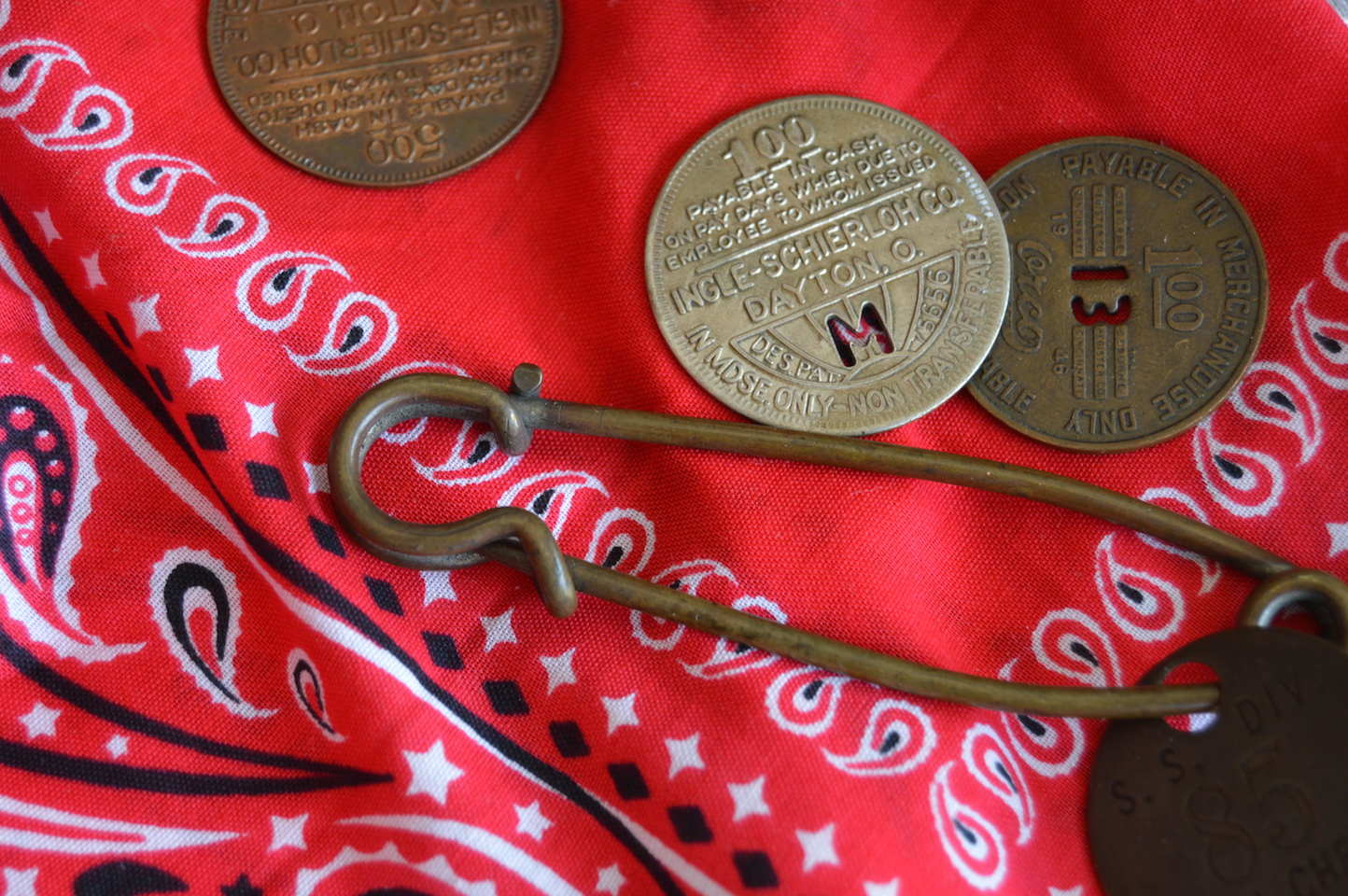
 Evidence that survived that period is on display for all to see at the West Virginia Mine Wars Museum, appropriately located in Matewan, WV. On display are the simple items used by mining families in the early 1900’s, like razors, and examples of the tents that many were forced to live in, plus a collection of coal company scrip (only redeemable at the company store), as well as many of the firearms from the period of the Mine Wars. Springfield rifles, chambered in either 30-40 Krag or 30-06 Springfield, as well as .45 caliber “Tommy” guns made famous by gangsters, and early Winchester lever action rifles that the coal companies bought in bulk to support the armies they created to oppress the miners. You can read the actual newspapers that celebrated the “Miners Hero”, Sid Hatfield. It was “Smiling Sid” who faced down the hated Baldwin-Felts agents in what would come to be known as the Matewan Massacre, only to be ultimately gunned down on the steps of the McDowell County Courthouse in Welch a year later by Baldwin-Felts agents (none of whom were ever arrested or charged).
If you are lucky enough to be in a union, the you owe it to yourself and your family to BE ACTIVE, and act in SOLIDARITY with your union Brothers and Sisters. When you hear a union officer saying that people fought and died for YOUR right to collectively bargain, they aren’t kidding.
Don’t believe all the bad press that claim unions to be outdated and dying.
Remember who owns the press.
Keep the faith in your union and each other. Don’t let the “charm campaign” of company owned stooges, or divide and conquer tactics employed by rich business moguls trying to pump up huge and unearned executive compensation or prop up sagging stock prices by cheating workers dissuade you in standing with those who toil daily right beside you.
As always, don’t just take OUR word for it, click on the links highlighted above to read for yourself

The High Price of Privatization
When you hear people talking about the “good old days’, you can trace their statements back to one fact; in those times they describe, there were certain things you can count on as simply fundamental. Those things were clearly defined roles of private and public services. Those things that were open to profiteering and plundering, and those things considered too important or essential to allow anyone to play games with. Public services formed a social foundation based on commonly held beliefs and values shared among all Americans and enforced by local, state, and federal agencies that were responsible for them.
The horrific bus crash in Chattanooga, Tennessee, that killed 6 children should be setting off alarm bells for anyone following trends and effects of privatizing essential services that have been traditionally been in the public domain.
 Unlike West Virginia, Tennessee school officials sub-let the duties and the responsibility of transporting school children to and from school to a company out of Illinois, Durham School Services. This has become a very appealing option for cash strapped school districts.
Durham School Services is a subsidiary of National Expess, LLC, of the United Kingdom. They operate over 21,500 buses in 34 states. Durham’s safety record has been reported as “satisfactory” by the Federal Motor Carrier Safety Administration, but they’ve still had 142 reported crashes with injuries and three fatalities in the past 24 months.
According to Glassdoor, a website that rates companies from an employment perspective, Durham has a rating of 3.1 out of 5 stars, while comments by current and former employees range from describing the company as great to many more that seem to point to gross mis-management, rampant favortism, and a high degree of gamesmanship in addressing wages and benefits.
Durham workers allege a working environment of high employee turnover, both in management and workers, coupled with defective and outdated equipment, and a company more concerned with the bottom line. Most of the national job boards have postings for jobs with Durham in all the areas in which they operate. What’s not mentioned in the job description is that applicants, even those already in possession of the right CDLs and accredidations are required to attend a two month, unpaid, training curriculum, and, if they miss a day in that training, they have to start over at the beginning.
Durham has set up a system designed not to attract the best or the brightest candidates. They set up a system to hire those who will enslave themselves to a company whose pay is often less that $15.00 an hour.
One of our own members was made aware of the price and push for school busing privatization in an article written on his blog at The Daily Kos. The article did not get a lot of attention when written in September of 2014, but gives a personal account of the push for privatization and the real effects on actual students and drivers.

Another article appeared on this site that was well researched and written by educator Dr. Daphne Greenwood of the Colorado Center for Public Policy at the University of Colorado. Her research warned of taking the accountability and decision making power away from elected officials and the reduction in transparency when public services are moved into the private sector. Her well defended conclusion is that such actions undermine the public trust, as well as democracy itself.
School bussing isn’t the only public sector enterprises being quietly pushed into the private sector. The privatizaton of prisons made news when it was revealed that a judge was investigated in a scheme in which he purposely sentenced teen offenders to harsh prison terms in a kickback scheme involving a privately operated juvenille detention facility in his district.
Charter schools, long touted as the answer for failed school districts, are also under fire for lack of transparency in the places in which they operate. Charter schools are turning out to be more of a symptom of America’s war on workers, more than an answer for any kind of failings by schools.
One organization that has successfully fought off being absorbed into the private sector is the United States Postal Service. With increasing competition from UPS, Fed-Ex, DHL, and other private carriers, the post office employees have been attacked in the market as well as from Capitol Hill.
One industry the UWUA is very familiar with is public water supplies, in it’s battle with American Water. Our members are doing more than just protecting their jobs. They are protecting the communities they serve and live in when American Water cuts staffs dangerously low and do other things that put the public they serve at risk.
The formula is simple: political forces work to defund and under-staff the targeted industry and then point to the ineffectiveness of the targeted industry and then introduce the answer to the problem they created by moving that industry into the private sector . Once an industry is in the private sector, a veil of secrecy decends over it as greedy CEOs start hacking the system to pieces, attack employees’ collective bargaining rights, and transform the industry to just yet another stock market symbol, more interested in shareholder return than safety or accountability.
As the lines between business and government becomes even more blurred, it’s more important than ever that we recognize the importance politics plays in our daily lives and the effort of business to usurp those essential public services for their own greedy ambitions, and for the enrichment of a small and select few at the price of the rest of us.
The sale of children into prison, or the death of children on a school bus are high prices to be paid in service of a social, economic, and political philosophy based on destroying unions and enslaving workers.
YOUR UNION RIGHTS!
The National Labor Relations Act is the principle labor legislation in the USA. It was enacted in 1935, and it made employers actions of spying, interrogating, firing, and disciplining workers for expressing their union support illegal. Before then, workers were routinely victimized by their employees to the point that Congress felt the need to fashion law that could prevent a second American Revolution.
The NLRA codifies American Labor Policy to include the right to collectively bargain with their employers for better wages, benefits, and working conditions.
It was quite a change for employers, who had built vast and tyrannical kingdoms staffed by gaunt people living on the edge of starvation. Suddenly employers were forbidden BY LAW from discriminating against workers who joined unions, who participated in a leadership role in a union, and engage in strikes called by their union.
The NLRA has 41 Sections, but for union members, Sections 7, 8, and 9 are the most often used and cited.
Section 7 plainly states that employees SHALL have the Right to self organization, to form, join, or assist labor organizations; to bargain collectively through representation of their own choosing; and to engage in other concerted activities for the purpose of collective bargaining or other mutual aid or protection.
Section 8 of the NLRA deals with VIOLATIONS in exercising your UNION RIGHTS. These violations are usually referred to as Unfair Labor Practices, or ULPs. There are FIVE types of behavior that employers are expressly prohibited from:
- Interference, restraint, or coercion directed against a union or other collective bargaining activity.
- Creation or domination of a labor organization.
- Discrimination against employees because of union or bargaining activity connected to their union, or to discourage support for their union.
- Retaliation for filing ULP charges or cooperating with the NLRB in investigating such charges.
- Refusal to bargain in good faith with union representatives. An employer is also forbidden from attempting to direct deal with a union member individually, outside of their elected representatives and collective bargaining agreement.
Employers are not supposed to THREATEN, DISCHARGE, INTIMIDATE, SUSPEND, DISCRIMINATE, or engage in any act in any other manner that could be interpreted as an attempt to curb, suppress, or otherwise interfere with an employees choice to engage in their UNION. They are not supposed to DENY the union information when it is asked of them, interfere or obstruct a union from investigating issues of their members, or make unilateral changes to wages, benefits, working conditions, or other subjects of mandatory bargaining.
What’ s really crazy is the lengths a company will through in violating the NLRA. They will spend MILLIONS of dollars a year on in-house lawyers and private sector union-busters to get around these simple and long-standing precepts that form the basis of a fair and just workplace.
The attack on collective bargaining has became so severe that the Congress enacted the “persuader rule“, which lists WHAT companies are employing union -busters and what law firms those skulking, slimy, back-door hucksters work for. You can even sign up for e-mail alerts from them to see if YOUR company is employing union-busters.
So when you hear a union officer saying how important it is for YOU to get involved in YOUR union, it stems from the knowledge of what has went into guaranteeing you those rights. Before the National Labor Relations Act, if you were caught by your employer talking about unionizing, you stood a very good chance of being beaten, stabbed, fired, and even shot! If you managed to live after being branded a “red”, “agitator,” or “radical” for daring to want something better for yourself and your family, you stood a good chance of being “black-balled” by employers in your field.
Workers died giving YOU the rights you have, and the right to good wages and safe workplaces. Don’t be too quick to simply give away what others paid so dear for.
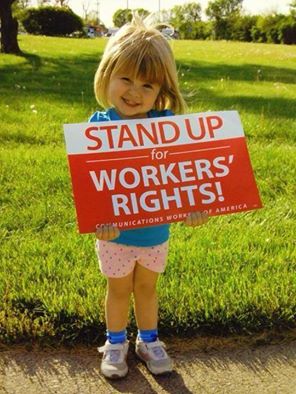
You and YOUR Union
What is it in us that compels us to wait until it’s too late before we commit our energy and resources to things we see developing before us and should’ve addressed long before now.
I’m not talking about simple procrastination concerning some petty, unpleasant, or inconsequential chore or obligation often put off, or some social nicety that we just failed or forgot to do.
Maybe it’s selfishness, or simply a matter of priorities. Maybe job security isn’t a big deal for you personally, or you have a distorted view of just what makes your job more secure. I don’t know.
What I’m talking about equates to seeing a storm brewing and continuing to sit on the patio with our feet up. I guess the hope is that it will blow over. Maybe it will slam the next neighborhood and not mine.
Six years ago, some Harrison employees saw such a storm brewing. Some saw it when Allegheny flirted so close to bankruptcy in 2003, others didn’t see it until the merger was announced, and there are even a few who still don’t acknowledge that a storm hit.
If you are, or have been, a union officer in our Local, you don’t need anyone to tell you it’s raining. From getting a member’s pay back for an arbitrary 3 day suspension from work, to getting money owed to 22 maintenance members, to getting a wrongfully terminated employee his job back, to securing a $1.25 million dollar settlement for variable pay that was capriciously withheld, to getting our FIRST collective bargaining agreement, and many more little victories; YOUR union officers have been there for YOU.
For YOU, and the good of our union, your union officers have forged relationships with other unions, with political figures, with media types, and taken the initiative in doing those things that make this relatively new union stronger and more capable of protecting YOUR RIGHTS AT WORK.
What we have established is an organization that is resilient and dynamic. We don’t have to accept the company’s word on anything, because we have the network and the resources to get YOU the truth about issues confronting our industry, company, and plant.
As a result, you, as a UWUA Local 304 member and Harrison Power Station employee have more accurate and complete data in those things that affect your job.
YOUR UNION is not perfect, it’s run by people no better or worse, no richer or poorer, no more talented or gifted, or no smarter or dumber than you.
One difference between an average member and a union officer is that a union officer does not have the option of ignoring facts.
They can’t ignore the obvious and pretend it doesn’t exist.
The reason for that is simple; each and every officer believes in the power of collective bargaining.
They are not swayed by a supervisor who buddies up with them.
They don’t forget that a company man will always do whatever the company orders them to do, be it right or wrong.
They don’t make the mistake of forgetting what’s at stake and what has come before.
Each and every union officer knows that it is their sworn duty to represent ALL members, regardless of egos and personalities.
Your union officers are on the job 24/7/365 (366 in a Leap Year). That holds true from your Shop Steward all the way up and beyond your Local’s President. Supporting your President is the UWUA National union. They stand ready with advice and resources, all to give you, the union member, as much political, economic, and social power as you want or need.
All do this unselfishly, giving of their time and talents in doing what can be a thankless and stressful job that devours family time, and quiet evenings at home in favor of time at meetings and conferences, talking on the phone, or writing an article for the website.
All your officers ask is that YOU, the member, clear ONE night a month to attend your Regular Monthly Union Meetings. They are the 2nd Tuesday of the month, every month except December.
So what is it in people that makes them wait until it’s too late to act, or until a situation deteriorates into chaos before they stand with their fellow union members?
Must we wait until the barn is fully engulfed in flames before we draw the first bucket of water from the well?
Don’t  wait!
wait!
If UWUA Local 304 IS NOT what YOU want it to be, then step up and be heard, Take a hand in YOUR union and make it what YOU want it to be. We have MORE in common than we have in differences.
In 6 years, I’ve never seen a member shunned from the Union Hall. I’ve never seen a member disrespected or their opinion summarily rejected out of hand.
For you stalwarts who’ve come to almost every meeting and stepped up when asked, THIS present union administration THANK YOU! You’ll never know what it means until you’ve been in the HOT SEAT!
Election for YOUR union officers will be this September. Come out to the union meetings and get caught up on what’s going on. Come out and nominate someone you think would be a good representative of YOUR Local, or get nominated yourself.
The only payoff in being a union officer is the knowledge that you stood up for yourself and your Brothers and Sisters when it counted.You fought while others hid, and you had guts while others stood by holding their manhood cheaply before them when the storm came.

Behavior Based Safety-A Strategy To Blame The Worker
Safety in the workplace is essential whenever there are great amounts of potential energy at work around and beside where workers also work. Nowhere is this more true than in a power station environment. High voltages, large machines that spin at hundreds and sometimes even thousands of revolutions per minute, piping systems carrying large volumes of various process fluids at high temperatures and pressures, and all the dangers of handling, transporting, preparing, and burning combustibles.
Such an environment is a breeding ground for accidents.
In Behaviour Based Safety (BBS-an acronym that fits such programs), there is NO SUCH THING as accidents. There are incidents, and each one of these have a causality chain that just so happens to prove the employee liable and absolving the company of all liability.
Isn’t that a convenient?
Unions are well aware of what BBS represents for their members, as well as all workers. Imagine if such programs existed at the turn of the 20th century. Imagine blaming the workers of the Triangle Shirtwaist factory fire, the Texas City oil refinery fire, and any of the many coal mine disasters right here in our own state.
That is exactly what such programs are designed to do.
Many national and international unions recognize such programs for what they are and are educating their members to the dangers they face in just trying to do their jobs. Here are some useful links: United Auto Workers, United Steelworkers(1), United Steel Workers (2), even the AFL-CIO has recognized what BBS represents.
The argument is that “traditional” safety programs did not work because they failed to prevent accidents, opening the door for a new approach. Behaviour Based Safety was born. In it’s purest form, BBS was supposed to remove the blame, and accusatory elements, that many blamed for their safety program failures, and instead use a cooperative approach in dissecting each accident into it’s basic facts and then attempt to address the human performance aspect to nullify future events.
So did it work?
Dupont, which was key in BBS development, adopted and implimented the program. According to the United Steelworkers, Dupont’s results are less than stellar, as detailed in their report, “Stop Not Walking The Walk-Duponts Untold Safety Failures.”
Proponets of BBS claim that the behavior based safety model is sound and anywhere that the program failed was because it was improperly implimented or that the adverarial relationship between the company and the workers (or their unions) poisoned the purity and well intentioned attempt by those companies to address their safety responsibilities. One safety consulting firm even published the “7 Deadly Sins” of BBS programs.
In a game of “one up-manship”, corporations have even used their BBS programs to acquire the Occupational Safety and Health Administration’s accreditation under the Voluntary Protection Program, or VPP. So not only do they feel are they absolved of all liabilities for providing a safe workplace, they gain the added caviat of not being inspected regularly by the federal agency tasked with ensuring worker safety. VPP has had many critics and updates, and even a report by the Government Accountability Office (GAO) that identifies many areas for improvement.
The result is a more dangerous working environment for all workers whose employers weild this double edged sword that slashes through skin and bone just as it shreds safety standards established over the past decade and a half of the industrial revolution and paid for in the blood of workers killed on the job. Many wonder if VPP is broken. Unions are dealing with both BBS and VPP, and agree that the union must own their workplace safety, since the company won’t, and are educating their members in working in this new environment of “blame the worker” philosophy.
What it all means is that the rich get richer at the expense of working people and that wealth is further protected by both programs that deflects responsibility of providing safe workplaces.
Perspective For Union Members!
Unions have been around for a long time. Before they were legally recognized, the activities on anyone brave or dumb enough to stand up against an employer were branded as a troublemaker. They were too often fired for insubordination, and were even “black-balled” among employers so that they couldn’t even work in their field.
Workers standing up against unjust employers is one of the scariest things to the ones in power. History is replete with tales of the the infamous Pinkertons, Balwdwin-Felts, as well as a host of others that served as ‘guns for hire’ for employers to suppress workers who rebeled against management.
As unions gained legal status and the government took note on how businesses were corrupting the political system, laws began to be passed that limited private security firms and their unofficial militias. Strike breakers, like Pearl Bergoff, found themselves out of work, their detective licenses they hid behind revoked, and the politicians they once owned started running for cover.
West Virginia has had it’s share of labor strife. There was once a riot in Grafton that was blamed on striking machinists who worked for the railroad. Workers in Martinsburg once held a strike against the B&O Railroad and the Mine Wars and the founding of the United Mine Workers is legendary throughout labor history.
The West Virginia State Archives has many exhibits, some of them available online, that chronicle our state’s labor issues. Another great resource for West Virginia history of all types is the West Virginia University Regional History Collection.
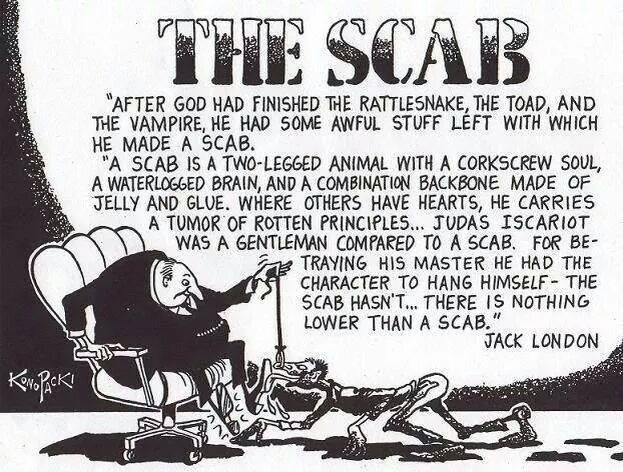
One thing that hasn’t changed is the tactics of union-busting and strike breaking. Management will seek out what they consider the ‘weak links’ within the membership; the disaffected, frustrated, the loners, the greedy, and short-sighted,and use them to penetrate and inform to them about the union. The company will try to discredit, blame, and incite the membership against their union. A name was bestowed on those who worked against their fellow workers and that word is, “scab.”
Social Media and Unions
Most of you have heard that Social Media (Facebook, Twitter, Snap Chat, Insta-Gram…etc) is fast becoming a factor affecting your application for getting a job, but did you know that it may also play a role in your keeping a job?
The stories of prospective employers who dismissed a candidate from consideration for a position because of something stupid that was found on social media are not uncommon. Employers are using social media in many ways, many of them are still evolving. Companies are trying to connect with their customers in a more personal and intimate way.
Much of this effort is purely public relations. Social media can create a “warm and fuzzy” illusion between customers and a company that provides them a service. If that company has competition, social media can drive up customer satisfaction surveys, even if the service is not improved or even gets worse. Bottom line, companies with a strong social media presence are less likely to face criticism or backlash from customers and communities they serve when it comes time to push through initiatives to the comany’s benefit before government regulators, and they are more likely to forgiven for their transgressions.
For working people, social media may also give companies an advantage for monitoring their employees, especially when forming or managing a union.
Our Brothers and Sisters at UWUA Local G-555 are facing this issue head on.
In a charge before the National Labor Relations Board, The Gas Workers Union G-555 has stated that their employer violated their Section 7 rights to engage in concerted union activity by monitoring their members on social media and then used that unlawful surveilance to target members. According to the charge, members were interogated about certain posts, and that posts were even removed from the union’s forum resulting from intimidation of those investigations.
Simply put, the union says the company’s activities are a violation of members privacy and interferes with the union’s ability of self organization and administration.
The National Labor Relations Act states: “Employees have the right to unionize, to join together to advance their interests as employees, and to refrain from such activity. It is unlawful for an employer to interfere with, restrain, or coerce employees in the exercise of their rights. For example, employers may not respond to a union organizing drive by threatening, interrogating, or spying on pro-union employees, or by promising benefits if they forget about the union.
Section 7 of the National Labor Relations Act (the Act) guarantees employees ‘the right to self-organization, to form, join, or assist labor organizations, to bargain collectively through representatives of their own choosing, and to engage in other concerted activities for the purpose of collective bargaining or other mutual aid or protection,’ as well as the right “to refrain from any or all such activities.”
As employers try to dominate more and more of their employees’ time, their speech, and their activities outside of the workplace, it’s important to remember WE ARE AMERICANS FIRST!
Unions have a RIGHT to get their message out, and to discuss, debate. argue our points among ourselves.
Union Busting is moving into the 21st century, to online websites and social media, but, just like any other type of union busting, it can be defeated by the workers if we stand together and demand that our rights to free speech, free expression, and freedom from oppression be respected.
The Importance of Attending Union Meetings
There have been a couple of issues that came up the last few weeks that really begs the question that if you HAVE a UNION, why are you not using it as it was intended?
One employee was on a “special assignment“, one that the company wanted done and assigned him voluntarily to do, but without discussing it with the UNION, as required by the CBA.
Now, there’s a problem with that employee’s eligibility for overtime work while on the assignment and the employee has came to the union for help.
We are certainly willing to help the affected member, and the failure is not the member’s since it was the company that has the requirement to discuss such things with the union, AND that our members are being consistently lied to by management telling them, “the union agreed.”
Another isssue involves sick time, in which there are several issues.
One of the issues was discussed at the November meeting, which is that there are hidden fine print items in the company’s FMLA package that, if you sign them without reading them, you’ve just agreed to grant the company FULL and UNFETTERED access to ALL of your medical records.
Another issue is with the company’s Physicians Release (click to get the Allegheny form) that is required for an employee to return to work after an extended illness or injury. The company INSISTS that members use their 709 form, which is a part of their Absence Manangement Program. Absence Management was proposed at the bargaining table and rejected by YOUR union. This means we are still under the Allegheny (or as the company called it at negotiations, the “102 plan”) sick plan. This means NO ABSENCE MANAGEMENT, NO FIT FOR DUTY, and only minimal access to employees medical records to those pertaining to the illness and injury.
All the above are examples of things that were discussed at our Regular Monthly Meetings, but if you weren’t there, then you don’t know about it.
If you are not visiting your union’s website, then you are missing out, yet again.
We constantly post updates on the NEWS tab, meeting dates on the EVENTS page, and the CBA, M.O.A.s and other useful information on the 304 Resources page.
Our 304 Officers are often approached at work with union questions, or someone casually asking what happened at a meeting. While most of these conversations are considered incidental, it’s not fair to your Officer or to YOU because we know, as union officers, that we can’t have extended dialogue with members on company time on union issues.
It’s not that we are unwilling.
Come to the meetings or call us at home, since most of our home phone numbers are on the 304 CONTACTS page. We are always willing to talk to members.
The more we are involved in our union, the more we act like a union, and the more effective we are as a union.
It is the responsibility and the duty of EVERY 304 member to work under and enforce the contract. You do this by KNOWING the CBA (since the CBA is on the website, many employees have it saved on their phones and handheld devices, while some access it from the company’s computers which is thier right), and then asking questions of management when you think they are operating OUTSIDE of it. If the answers you recieve are not acceptable, you have the duty to file a grievance and demand an answer.
The NEXT TIME YOU ARE TOLD THE UNION AGREED TO SOMETHING, ASK FOR IT IN WRITING!
Only the company and management wins when you forgo your rights at work and they profit by us not acting like the union that we are. It’s YOUR job, YOUR compensation, and YOUR union.
It’s NOT that any of us take our jobs or our employer for granted. It’s quite the opposite, we have a job that is good enough to FIGHT for and protect, even against our employer if we have to.
Want a job where this is not neccessary?
A former Plant Manager suggested to a concerned employee that he go work at Wal-Mart if he didn’t like what was going on at Harrion Power Station. He’s gone now (the Plant Manager), but 304 is still here.
All aboard!
Lessons For Effective Management, Issue #1
Issue #1- Love Your Hell Raisers
There are a lot of books, articles, even whole magazines that are devoted to teaching managers how to be effective leaders so they can maximize their human performance for greater efficiency and profit. You have heard many of them mentioned on this site. Books by multi-millionaire CEOs that light the way for other CEOs, like “Jack Welch and the GE Way“, or Al Dunlap’s “Mean Business.” These books are so powerful that they spawned books about them and the authors, like “Chainsaw: The Notorious Career of Al Dunlap in the Era of Profit-at-Any-Price,” and, “The Billionaire Shell Game”.
Before the era of “GREED” and the philosophy of “ME”, management training focused on building relationships between management and employees through the values important to most of us, like decency, respect, forgiveness, and the lessons we learned about The Golden Rule; ““So whatever you wish that others would do to you, do also to them, for this is the Law and the Prophets” (Holy Bible, Mathew 7:12).
These principles were ingrained into us as Americans, and business and industry adopted them from lessons learned over decades of violent labor uprisings, work stoppages, and bloody strikes. Through concessions won through unionization, the American workplace evolved into an extension that reflected our society. The ideals of fairness, justice, and equality found their way to the shop floors and became the expected standard rather than the exception.
So what happened?
What happened was that working people mistakenly thought the war was over. We thought, wrongly, we had earned the right to simply go to work, do our job, collect our pay, and go home in peace. Meanwhile, the corporate masters were plotting, and then – BOOM– they launched their attack!
They didn’t aim their guns at the workers, who had been lulled to sleep by decades of labor bliss. So soundly we slept that we quit paying attention to politics and business trends. We didn’t go to our union meetings, and pretty soon our elected political representatives, as well as union officers, started looking out more for themselves and not us.
Still, we slept.
Then, a little at a time and after the corporatists put their political lapdogs to work to change the laws to justify it, wages and benefits started falling. Two-Tier contracts and concessions became the new norm. For those unions that were left, promises were made that these were temporary emergency measures to help workers keep their jobs and be competitive. Companies claimed that much of the cuts would not be necessary if they didn’t have to comply with the restrictive and outdated notions of collective bargaining agreements, so union membership fell more.
We were assured that our industrial base didn’t matter because we would all have high paying jobs in technology. Then the tech jobs followed our manufacturing out of our country and to those countries who have enslaved citizens who work for less than sustanance wages and live in abject poverty at the hands of their oppressive leaders.
Now, here we are.
Companies have been bought out or merged and then gutted for their usable parts and for mega-profit, irregardless of communities, workers, and jobs. CEOs are raking in huge sums of money, even when they bankrupt the business they run, as wages for those who do the actual work are in incremental retreat.
While we were told to worry about flag burners, abortionists, gays, and our guns; prevailing wage was killed, and “Right To Work” became the law of the land before we could even blink.
We are told to blame the welfare fraudsters, and that we should drug test the malingerers. In the meantime, the ones who unleashed the jackals of deregulation, greed, and reckless capitalism upon all of us are sitting in far away locales, via their private jets, where their money lays untaxed and hidden while laughing among themselves that we are so easily duped.
There are a few of us who woke up out of our coma early, looked around, and then sounded the alarm. We were labled “radicals,” “troublemakers’, and “hell-raisers.”
We prefer being called, “UNION THUGS”.
It used to be that innovativeness was an asset, creativity a positive, and self assuredness a virtue; now they are viewed as threats. When standing up was once admired, now it is feared. Those who dare, are labeled, targeted, and made examples of as a warning to others.
A lesson business needs to learn over is that they have a duty to treat their workers with dignity and respect. They can preach about it, codify it in long winded wordy corporate policies and guidelines written in eloquent legal-eze, and stop the war on wages, benefits, and working conditions.
To do this, they are going to have to do something that seems unthinkable to business leaders, and that is to embrace their hell-raisers, These folks are their conscience and they are passionate and fully invested in their jobs.
It’s the trouble makers, the radicals, and the hell-raisers that have moved this country forward for well over 200 years. They forced change when faced with injustice, they innovated when facing life’s challenges, and they found a better way to do things that were more productive, safer, and easier.
Together, working people created everything that America stands for and makes our country the beacon of hope it is seen as in the world. Without the radicals, we cease to be America. It’s a part of our identity, our culture, and our heritage.
Our Website’s Policy on Sharing
The UWUA Local 304 website is primarilty a blog more than it is an actual news site. It is a tool to keep our membership informed on issues affecting them and their families.
Anybody may submit their opinions for publication on our site by e-mailing them to our Local’s President or to our site’s webmaster. Just remember that we, as YOUR union, take the heat on anything we put out so we reserve full editorial control over our web content.
Our website has NEVER used a BYLINE (the name of the author of a particular posting). Part of this stems from the statement above, another part is that we WANT members to feel free to share their thoughts on our site without fear of ridicule or being targeted at work or home. This site does not exist to make anybody famous, it’s for communication with our membership, and the benefits that communication does for the good of our union.
We have A LOT of people looking at our website (from all over the world), and there have been inquiries from a few as to if they are allowed to borrow from our site.
In response to these requests, we have put together some very basic statements that embodies our philiosophy about anybody who may want to use anything we publish on our site.
We only ask that anybody using our content be a friend of labor.
You can read these statements by going to ABOUT US>SHARING POLICY.