How To Be A Union
Your union has made every effort to make you aware of labor history, a neglected part of our American history, but now it’s time to look forward.
Union members have been the recognized professionals in all fields of trade craft. The reason is simple, they have the training, experience, and pride to do whatever job in whatever trade they are in, regardless of the circumstances. Union members are proud, tough, and honest working men and women who realize and accept the fact that they must work for a living, but also accept the responsibility that they have a duty to themselves, coworkers, and family to see that the work they perform is done correctly, safely, and has the kind of pay and benefits that make the trade off of time and skill worth it for them and their Brothers and Sisters.
The attributes that make up a good union member are those who make up any good person. The difference is that a union person expands these to his fellow union members the same way they would for family and closest friends. They include:
- Integrity: the quality of being honest and having strong moral principles. Unions deal with schemes hatched by those who may have questionable integrity, to the point of overt dishonesty. Our members must hold themselves and each other to a higher standard. If a union member is wrong, then the honorable thing to do is humbly admit it, own it, learn from it, and move on.
- Honesty: the foundation for trust in a relationship, and trust is necessary for a union to function and thrive. When you’re always honest with someone, it tells them that they can trust you and the things you say. It helps them know they can believe your promises and commitments.
- Fairness: impartial and just treatment or behavior without favoritism or discrimination. All union members are not alike, but each one needs to be treated with the same deference as any other, without bias. This is regardless of political or social views a member may hold because those are the things union busters will try to use to divide the membership.
- Respect: is an attitude of considering someone else’s perspective and holding another fellow member in esteem. It’s shown by; listening to others, affirming people’s opinions, empathizing with different perspectives, disagreeing respectfully with being disagreeable, apologizing when you’re wrong, calling out disrespectful behavior, complimenting the achievements of others, and showing gratitude.
- Maturity: an emotionally mature person is always adding value to themselves and those around them. A curious and learning attitude form a key part of a mature persons daily activities and goals. They are able to understand and manage their own emotions. They also acknowledge that our common goals are more important than petty gripes and personality conflicts.
- Professionalism involves being reliable, setting your own high standards, and showing that you care about every aspect of your job. It’s about being industrious and organized, and holding yourself accountable for your thoughts, words and actions.
 A union member knows themselves, their job, and that their union has their back. They don’t have to be afraid of the ‘boss’, and know that they can call on a fellow union member for help. A union Brother/Sister stands up for each other. Most of all, union workers forgive each other, when needed.
All the above may seem a tall order for someone who’s young, making more money than they ever dreamed possible, and may question what a union can do for them. The answer is simple, even if you dismiss everything above, and that is you are blessed with a good job that pays well and gives you a path into the ranks of America’s middle class, a place union membership created.
Question is, “is your job worth protecting?”
There comes a time in every working persons life when they must take stock of themselves and the people they work with. By doing this, they set their own opinions and make moral and social adjustments in whom they confer and confide with and those they don’t. This requires and honest evaluation of one’s own wants, needs, and desires, and leads to the same examination of these in others.
A union works for the betterment of ALL it’s members, and each true union member should do the same. If you work with someone who consistently plants doubts about your union in your ear or those in your crew, and even openly attacks your union, it may be time to examine their motivations.
 You have tools to help you overcome and develop within your union. One is your Collective Bargaining Agreement. Your CBA forms the foundation of your union. Your duty is to know it and enforce it when the company deviates from it. You can do this by confronting management directly (with another union member as a witness), through your steward, or by utilizing the grievance procedure in your CBA. In support of the CBA is your union’s website, which has a lot of information for our members, as well as your union’s Facebook page.
Your National Union, Local Union, it’s officers, and affiliates are the only mechanisms in place that fights for you. It is up to you to fight for it because without solidarity, there is no union.
Your union is what you make of it!

You Against “The MATRIX”!
Working for a multi-billion dollar corporation puts you at an extreme disadvantage if, somewhere along the line, you and the company should have a disagreement. After all, the company employs a whole department of legal professionals in every legal area in which they presently or may operate. This vast network also has all the consultants, advisors, paralegals, and clerical staff to make sure he company is protected from any kind of malfeasance, negligence, or responsibility in the things it does to do business in the manner they see fit. This means externally, with customers, regulators, municipalities, and state and federal government officials; as well as internally, like dealing with unions, contracts, and employees.
In furtherance of the latter, the company’s legal teams weave a web, or “matrix”, of company policies, programs, and guidelines that you, as an employee, must follow when doing your job. Each one of these rules and regulations form a gauntlet you have to run each day as an employee, and are usually cloaked with religious fervor under the word and term, “SAFETY.”
Trouble is, almost NO HUMAN can know, adhere, and navigate this “matrix” and get any job done. The company knows this because they designed the system to ensnare you if something should happen while you are at work. No matter how conscientious, responsible, or cautious you may be, it only takes one slip to start a chain of actions that, in the end, will ALWAYS find YOU at fault.
If there is one and only one reason why it’s so important to have a union, this is it!
 Without a union, you can sue the company. In the end you’ll end up terminated, usually for no cause, and then spend the next decade fighting them in court until any settlement you reach will be a zero sum gain after the lawyers and creditors you couldn’t pay while fighting come looking to collect. This happens all the time, and especially so among large corporations.
A union will bring all the resources, local, national, and even international that they have in coming to your defense, and, if not successful, protect your job and assist the private counsel if you decide to fight on your own.
Take the time to study your Personal Safety Manual, and read up on the tenants of Human Performance and behavior based safety. After you get done with that, pull up the company’s Corporate Policy Letters, and take a closer look at the “safety” programs they have published for all employees too see.
The company is betting you won’t bother, which is why one of the first statements to employees is that ignorance of this material is no excuse for violating any of them.
Think about this the next time you tag something out, or put a wrench on a bolt, or have to fill out a form for line breaking or hot work. Confined spaces and equipment operating procedures are perfect examples of signatures being more important than safety. How many liquid transfer papers do operators fill out for lime, urea, acid, oil, hydrogen, and other bulk deliveries.
Each one is a potential grenade that could go off in the hand of the person holding it.
It’s All About Protecting Our Members Rights!
Many of you may or may not know that our union has recently arbitrated a long-standing grievance involving an employee with twenty-five years of combined service with Allegheny Energy and First Energy. This employee worked shift work in plant operations for fifteen years, advancing all the way to the “A” Operator’s position, and then bid to maintenance for an additional 10 years.
This employee also witnessed the birth of UWUA Local 304 and served our union faithfully as a Steward and as the Secretary Treasurer. The trouble started when this employee was being “resource shared” at Fort Martin in September 2018.
The employee fell from a platform, injuring his shoulder. The employee reported it, as required. This touched off a series of events that were as unimaginable as they were unwarranted. That’s when the employee engaged our union by filing a grievance.
Previous to the accident, our union fought the company over the forced use of the now infamous “Form 709″. The union had argued that this medical related form that gave the company unfettered access to an employees’ ENTIRE medical history. The union fought and won in a previous arbitration that Local 304 members were EXEMPT from the offending form and made it clear that the company had no right to an employees’ entire medical history or even a specific diagnosis about a member’s condition when they use, they’re contractually guaranteed sick time (remember-others lost this defined benefit, replaced by PTO).
For some time after 2017, the company was still slipping 304 members the 709 form, and the employee/grievant received the disputed form and returned it as requested. Once the company had wrongfully granted access to the employees’ entire medical history, they denied the employee the overtime that he usually would’ve worked and later would not even allow the grievant to return to work.
Over the next two years, the union, on behalf of the grievant, and the company wrangled while the grievant was bounced from company doctor to company doctor. Two of the company’s doctors even cleared the grievant to return to work. Regardless of what each doctor’s notes said, none of them were good enough to allow the aggrieved employee to return to work. All the while, the grievant used up his full- and half-time sick pay, his PAD days, and all of his vacation days. He was being starved out.
The grievant was allowed, briefly, to return to work. Another grievance was filed in an effort to get the employee paid for the work; plus, overtime he was wrongfully denied. Essentially, our union wanted the grievant ‘made whole”. The employee retired in disgust in 2020, but our union fought on.
In the end, our retiree/grievant Brother was MADE WHOLE as the union requested in its’ grievance. The award granted by the arbitrator reads as follows:
The grievance is granted. The Company failed to prove it had just cause for the de facto
suspension of the Grievant when it took him off work on October 30, 2018.
1. The Company is ordered to compensate the Grievant for economic losses he
suffered as a result of being removed from work.
2. The Grievant is to be compensated effective February 22, 2019 until the date he
returned to work, December 4, 2019.
3. Compensation includes lost pay at straight time for all regular hours of work that he
would ordinarily have been assigned, as well as the paid time off the Grievant used
to supplement his income, such as vacation and personal absence days.
4. Lost pay shall include any wage increases the Grievant would have received had he
not been removed from work and any lost overtime from February 22 to December
4, 2019.
5. The parties are to meet and attempt to determine the amount of compensation and
other make whole relief owed to the Grievant from February 22 to December 4,
2019. The Arbitrator retains jurisdiction for 90 days to resolve any issues as to this
remedy only.
So, what does old grievances from a now retired employee have to do with present day 304 members?
The answer is that the Utility Workers Union of America, through its’ Local 304, is always looking to protect your rights. In this case, it’s the right to keep your personal and private medical information in your control and not allow anyone, not even our employer, to abuse those rights for their own ends.
The grievance process is one of the most important tools we, as members, have in defining and enforcing our collective bargaining agreement, as this arbitration and award proves.
Our contract gives management certain rights to run the business as they see fit, most of which are codified under the section called “Management Rights”. However, even these broad and far-reaching rights do not give management the right to abuse our members rights, either collectively or by singling one of our own out.
As a union, UWUA Local 304 may not always win, but we will always fight for you!

Work/Life Balance M.O.U.
Check out our latest Memorandum Of Understanding which gives our members added flexibility in work schedules! The entire document is available by going to “304 Resources“, check it out!

Steward’s Corner: What to Do When Your Union Leaders Break Your Heart
Article used with permission and grateful appreciation as it appeared in Labor Notes # 491. This post is not meant to denigrate or disparage any Officer, or member of UWUA Local 304, the UWUA National, or the AFL-CIO and affiliates.
This post is meant as a warning to those union members who, over time, may grow to take they’re union for granted, or think solidarity and participation by them is not necessary.
Labor Notes/ Steward’ Corner February 14, 2020 / Ellen David Friedman
If you’re a union member, unfortunately the chances are good that you’ve had, or will have, your heart broken at least once by one of your own leaders.
Maybe it happened when you first tried to get active in your union, but found that leaders didn’t welcome you into their inner circle. You wondered whether there was some special skill you lacked, and you ended up confused and self-doubting. Maybe you just gave up.
Or possibly you brought an issue to your leaders—something that was serious to you and your co-workers—but were ignored, or treated with disdain, or told “there’s nothing we can do.” Or you worked long and hard to reach apparently apathetic co-workers and finally got traction on a specific goal, only to be undercut, abandoned, or straight-up sold out by union leaders.
When this happens, it can feel pretty harsh. You’re not only disappointed with these leaders, but also wondering how it is that your union, an organization that exists to make your work life better, is in the hands of people who aren’t doing that.
I encourage you to recommit to your union and to change the culture into one where leaders respect and serve their members. And, if your current leaders can’t or won’t serve their members with more respect, then start making plans to recruit and support candidates for union office who will.
HOW WE GOT HERE
 If you’re bursting with organizing ideas and union leaders shut you down, often it’s not because they hate you. More likely, your ideas make no sense to them.
People serving in union office tend to follow the rules of the system they inherit. Maybe they’re clinging to familiar old patterns because they’re overwhelmed, underprepared, or beset by pressures from different constituencies. Maybe they think the union’s power is limited to filing grievances, and they have little experience about how to do things differently.
How did things get to be this way, and how can we change it? It’s useful to zoom out for a moment to consider the effects of the 40-year corporate offensive known as neoliberalism.
During certain periods—the 1930s and ’40s, and the late ’60s and ’70s—both union power and the push for union democracy were strong. Members were typically more active and more ready to fight. They also felt they should have more of a say in their own unions.
But starting in the 1980s, unions suffered a series of defeats, growing weaker and weaker. During the same period, more and more union leaders began to discourage, or even actively suppress, members’ initiative and willingness to fight. The idea of “keeping the peace” with the boss became dominant—when exactly the opposite strategy was needed to fight the corporate onslaught.
CULTURE OF SECRECY
Sadly, plenty of union leaders believe that unions should be top-down, with a small group controlling all the important information, decisions, and actions. How many times have you heard that grievances can’t be discussed with the membership because of “confidentiality”? How often are months of contract negotiations reduced to a terse report that “progress is being made on Article 17, Section 5”?
This withholding of information isn’t required by law; it’s just widespread in union culture and practice. The effect is to keep members uninformed and distant from decision-making.
These kinds of leaders likely have many explanations about why member engagement won’t work: “Members don’t come to meetings,” “They don’t read their email,” “They are complacent,” “They expect me to do everything,” “They are scared,” “They only care about their own problems.”
Rather than take responsibility to educate, consult, and engage members, they dismiss the members’ essential role.
The underlying dynamic in locals like this is disrespect. Leaders don’t trust the members, and therefore disregard them. Members feel disdained and excluded, and therefore withdraw.
Such a hollowed-out union is weak because it poses no real threat to the boss. If the only person the boss needs to contend with is a union president, because no one else ever shows up, then the boss will conclude that he just needs to satisfy the president. This can become a system of “exchanging favors” rather than “contending for power.”
A strong union needs competent leaders who invite member engagement and help to give it focus. It also needs active members who can bring their aspirations, creativity, and power to any initiative.
GET CONCRETE
If your leaders aren’t the ones you hoped for, it may be up to you to change the culture and shape the future of your union. The first step is to get past disappointment or despair. Commit to action.
As in any union situation, don’t act alone. Talk to other co-workers. Your purpose isn’t to convince anyone, but to ask questions. For example:
- How do you think we’re doing, as a union?
- Are you able to get information and questions answered?
- Have you been active in the union, or tried to get active? What was that like?
- Are there things you’d like to see the union doing?
If you get a sense that others share your heartbreak, get yourself ready to talk directly with the union leaders. It’s important that this not be an emotional confrontation. Be calm, curious, and respectful.
Be prepared with concrete examples of what you and others have experienced, and with suggestions for how things could be improved. For example, you could suggest that the union should:
- Schedule meetings more regularly, at times and places most accessible to members
- Seek input from members for the meeting agendas
- Use meetings not only for officer reports, but also to promote discussion
- Open up processes previously conducted “confidentially,” such as bargaining, grievance representation, labor-management meetings, and so on
FIGHTING ON TWO FRONTS
Your leaders may reject your suggestions. In fact, it’s wise to prepare yourself for some very tough sledding if you decide to challenge them.
They may feel you are assaulting their integrity or competence, or trying to “steal” their power. They might react defensively—or offensively. There are, sadly, endless stories of members who have been excluded from union activity or targeted, denigrated, or smeared by their own union leaders.
Sometimes union leaders even collude with management to bear down on a “troublemaker,” by which they mean someone who is trying to democratize the union and the workplace.
If so, stay steady, organize, and persevere. Be strategic rather than angry. Don’t attack the leader, or spread hostility. Instead, figure out a way to build a base and take action.
Find a cluster of other union members who are ready to do something. You could start by finding a workplace issue that co-workers care about, bringing them together to talk about it, and developing a plan for action.
You may want to keep your leaders informed, but don’t ask for their permission. If there’s inadequate information flowing in the union, start an informal channel to share and solicit ideas—but don’t let it become a gripe-fest; that is a short route to disaster. Reach out to other groups that should be allies—unions representing other workers in your workplace, or community organizations—and open up conversations about common concerns.
CONSIDER A CAUCUS
In the end, if you find that you can’t move your local in a more democratic, inclusive, and activist direction, you might consider starting a rank-and-file caucus to open up the question of what kind of union the members really prefer.
Rank-and-file caucuses have a long and proud tradition in U.S. unions. The last time caucuses were common was the 1970s, but now they’re popping up again, particularly in teacher unions.
A caucus is simply a group of members who are dedicated to improving their union. Often the motivation is a lack of transparency, or leaders’ unwillingness to fight, or too much coziness with the boss. A caucus can start by organizing around issues, and may end up challenging the existing leaders in union elections.
If you do decide to go down the caucus path, prepare yourself for a lot more heartbreak along the way. It’s likely the incumbent leaders (old guard, as they are commonly called) will accuse you of being divisive or even anti-union. Your motives will be questioned, and bogus accusations made about your methods. But efforts to democratize unions are essential to rebuilding our power, and worth every hard, uncomfortable, and heartbreaking moment. Stay steady!
Ellen David Friedman is a retired organizer for Vermont NEA and a member of the Labor Notes board.
The Danger Of Ignorance
Recently, West Virginia Public Broadcasting posted an article claiming Harrison Power Station, OUR station, was one of the “deadliest” polluters and that emissions from our plant was responsible for contributing to 122 premature deaths in the U.S. annually.
The data used to support the article came from a propaganda piece from The Sierra Club, entitled, “Out of Control- The Deadly Impact of Coal Pollution“. The report goes on to state that 17 coal-fired power plants are responsible for an estimated 1,920 premature deaths.
The study goes into great and confusing detail of the methodology used to come up with these numbers, all backed up by name dropping prestigious universities and governmental bodies that seem to codify their conclusions.
Both the article and the report only serve to prove what we in the power industry already know, which is that ignorance is a very dangerous thing!
The article states that Harrisons TWO units produce 1,984 mega-watts, when in fact, Harrison has THREE units. The footprint of land and resources that Harrison occupies in generating this power is miniscule when considering that the most advanced windmills to date can only produce a maximum of average of 2.75 mega-watts per unit. This translates to 788 windmills to produce the same amount of power of Harrison Power Station.
The largest solar farm in the United States, to date, is the Solar Star project in California. It boasts 1.7 million solar panels that take up over 13 square kilometers of land for a laughable maximum output of 579 mega-watts. After 25-30 years of service, solar panels generally decline in output as they age.
Further neglected is an accounting of the manufacturing energy and resources used in building those windmills and solar panels. Harrison has been in dependable service over 50 years, with regular and predictive maintenance. The blades of windmills are not even recyclable!
One of the emergent technologies coming online is energy storage banks. Large batteries hooked to transformers. Most of these batteries are of the lithium-ion type. The pollution from coal mining pales in comparison to the harmful effects of mining lithium. Lithium mining has been shown to contaminate water tables in the misuse of water, releases large amounts of carbon-dioxide, and destroys large swaths of otherwise fertile land. It takes a half-million gallons of water to process one metric ton of lithium.
What about the power grid?
Large generating units are not meant to cycle up and down like they now have to do as renewable power intermittently cycles on and off the grid, when available. It’s not that renewables will take the place of coal, it’s more likely that this cycling effect will degrade these plants to the point that, because of a lack of reinvestment and a lack of political favor, will be the death nell for coal plants. This at a time when the demand for electric vehicles is set to increase the demand on America’s electrical infrastructure.
The scariest thing is when we get another winter storm like the historic polar vortex we experienced. Gas plants couldn’t run because the fuel supplies were frozen, solar panels were blotted out by an accumulation of snow, and wind turbines sat with icicles hanging from the blades.
Most Americans don’t have a clue how the electricity to their homes is produced, transmitted, and marketed to them. They remain blissfully ignorant of the real-world engineering and science that combines to make sure that when they flip the switch the light comes on.
There are organizations out there who take full advantage of this lack of knowledge and stoke fear and loathing of anything to do with fossil fuels. They raise money from this, pay powerful lobbyists, file lawsuits and injunctions to squeeze every drop of money they can from this topic.
All of us want a clean environment, and there’s no doubt that one day we will find a better way to meet our energy needs, but, until then, we have to let the technology for such energy to evolve and mature. It’s the sensible and responsible thing to do.
The old saying goes, “dance with the one who b’rung ya”.
Coal has been powering this country for over a century. It has pulled us through two world wars, helped us put a man on the moon, and allowed America to become the super-power that it is.
What Is A West Virginia Workers Life Worth?
What is a West Virginia workers life worth?
According to the West Virginia Legislature, as stated in the narrowly passed House Bill 3270, a worker’s life is worth $500,00 total. The bill in question is to amend the deliberate intent statute in workers compensation to limit noneconomic damages to $500,000. Pulling back this thin veil reveals that this bill is yet another attempt to cheat West Virginians by radical tort reform which caps awards to employees injured or killed from an employers willful violations of safety practices.
 The most serious of these violations fall under the category of “willful intent”. This is when an employer knows of a safety issue and chooses to ignore it, intentionally putting workers at risk and placing profit over safety.
Advocates tout this as a necessary pro-business step that would bring West Virginia more in line with our neighboring states and decry the high price of workers compensation insurance as burdensome to small businesses in our state. Proponents of this legislation paint a broad and misleading picture of greedy, high flying attorneys who reap the rewards of large verdicts that enrich them and cheat the victim.
This bill would restrict victims attorneys to a 20% cap on fees from an award or settlement. Many injury attorneys spend much of their own money in investigation, forensic tests, and expert witnesses, relieving the victim of these burdens. These same lawyers know that they often go up against industry titans who keeps a large contingent of legal talent on staff.
Maybe the most galling fact of this bill is the five-hundred thousand dollar ($500,000) cap. This amount is PER OCCURENCE. In other words, if you and a buddy get killed in the same accident, the capped amount is split between all those affected. In other words, your family would get two hundred-fifty thousand dollars ($250,000) for your life.
 Consider this, using the metrics this bill would mandate; the 51 workers killed in the Willow Island Cooling Tower Collapse on April 27th, 1978, would’ve been worth just a shade over nine Thousand-eight hundred dollars per workers. Upper Big Branch miners killed on April 5th, 2010, would’ve fared a little better at 17K apiece, since there were only 29 of them, but the 78 Consol #9 miners killed in Farmington on November 20th, 1968, would only be worth a little over six-thousand dollars each. Thirteen Hundred dollars would’ve been considered a large amount of money in 1906, if you were one of the 362 miners killed in the Monongha Mine Disaster, but still not enough for a widow to raise kids on, even back then. Of course if you were one of the unfortunate workers who helped dig the Hawks Nest Tunnel, your life would be worth a paltry five-hundred dollars, based on the estimate of a thousand men who died from breathing deadly silica.
This bill would also be applied to Black Lung compensation, something miners fought for decades to win.
A public hearing on this measure was held recently at the Capital and many testified for and against the measure. If you watch the testimony, you may even recognize a familiar face. To watch the hearing, click this link.
Life has always been cheap here in West Virginia, and laws were enacted to try to level that uneven ground. They were paid for by the blood and sweat of workers. The UMWA has come out against this bill, as has every organization that holds the lives of workers above shareholder value.
Anyone who has worked in any decent sized industry know that an employer will chance a half-million dollar settlement if he can run a wore out machine that has a replacement cost of four-million dollars for another year.
Here is a list of how each West Virginia Legislator voted in narrowly passing this anti-worker HB 3270. We urge you to write, call, and/or e-mail them to let them know that YOU stand with working West Virginians!
Get the WHOLE story by clicking on the highlighted links!
Your Union Hall is YOURS!
Thanks to the UWUA Local 304 members, your union has made the union hall our own. Your union officers have been busily sorting and filing almost 15 years of records concerning bargaining, NLRB charges, grievances, and other accumulated correspondence that is a part of the work of serving and protecting our membership.
15 years is not a typo, though our union wasn’t certified until 2010, there is also of years of records from the switch from Allegheny to First Energy, as well as all the files from our organizing drive.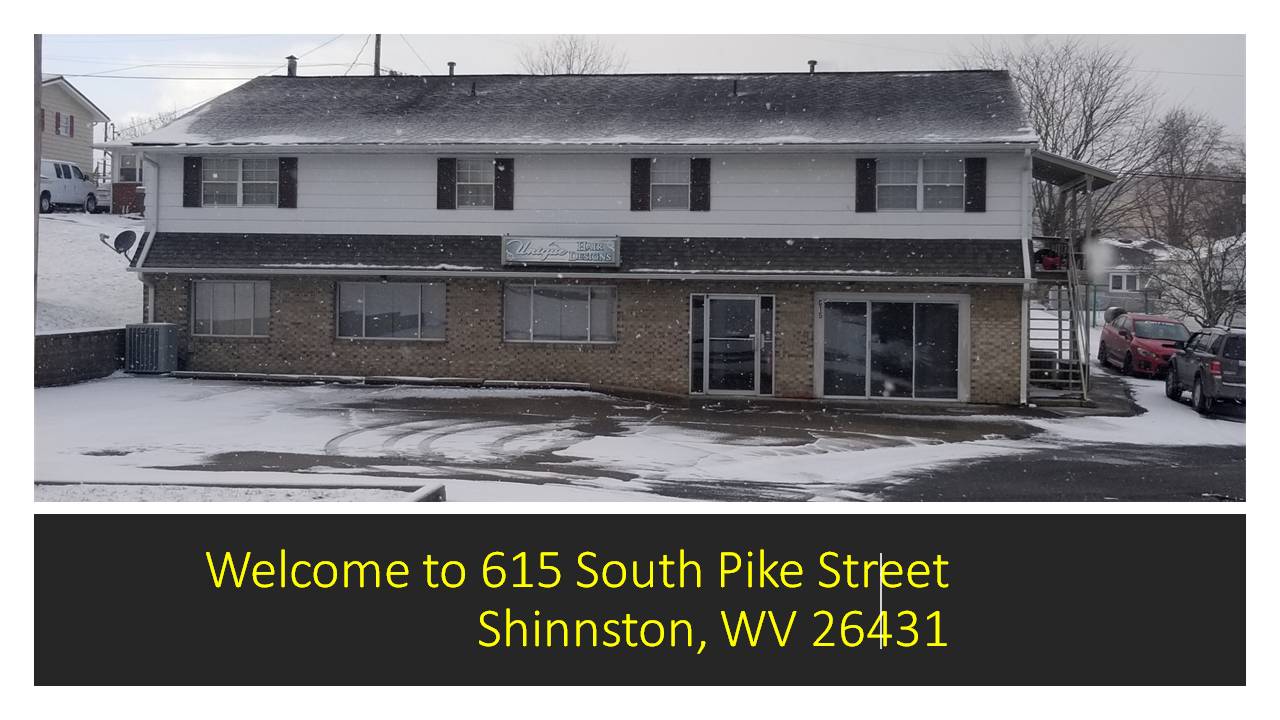 Having a union hall of our own allows us to do this, as a benefit to the membership, but, the hall itself is YOURS.
If you are a member in good standing, you can use the union hall for your own activities. Whether it’s a birthday, anniversary, a dinner, a business meeting, or other instances in which an office or meeting setting is needed. Your hall has Wi-Fi, a printer and FAX machine, tables, chairs, a kitchen, all at your disposal.
All you have to do is contact an Executive Board Officer to schedule the use of the hall. As long as your request doesn’t conflict with your union’s business needs on the date of your event, an Officer or Trustee who are key holders, will make sure you have access to the hall.
The only restriction is common sense in assuring that your use of the hall is for wholesome activities that do not conflict with the Union’s and Labor’s primary missions of representing workers, or are in conflict with the U.S. Constitution, the Constitution of the Utility Workers Union Of America, AFL-CIO, and/or UWUA Local 304’s By-Laws and collective bargaining agreement.
Anyone using the hall will be responsible to leave it clean and well-ordered upon completion of their use and that any member using the hall will be responsible for any damages caused by them or their guests.

Being a Union Is All About Making Things Better
 At January’s Regular Meeting, we got our first glimpse of the process we have to follow to offer our membership healthcare through our union. The CEO, Mr. Elliot Dinkin, from Cowden Health and Welfare Consulting Services gave a presentation of what we can expect as we navigate through the process of being able to offer the membership a more affordable choice in their healthcare plans.
Senior Consultant, Jessica Grande, was also there to answer members questions, which there were some very good ones asked,
Cowden administers the healthcare plan for our brothers and sisters in UWUA System Local 102, and have for the last three (3) years. Even before Harrison went with the UWUA in 2010, we have always envied the healthcare plans available to 102 members as compared to what the company offered, and wondered why we didn’t have the coverage and options that 102 members enjoyed.
UWUA System Local 102 President Travis Beck has been very welcoming and helpful to Local 304 as we begin this journey, and we will owe 102 many more thanks before we are done.
The process itself is all about participation. You will be receiving a questionnaire from Cowden to fill out and submit so that they have the data to shop the multitude of healthcare providers for a quote and options for the membership.
It DOES NOT matter if you are a dues paying member in good standing or not, or if you opt out of our current FE coverage for that which is available to your spouse through their employer (such as PEIA). It is vitally important that you fill out the questions and submit them so that we can have an honest snapshot of our membership and their family’s healthcare needs and to offer you, as a UWUA member, a competitive choice.
What is important is that we get an accurate quote for whatever plans available to our membership.
Those who have opted out of their union dues obligations will not have a vote in this, when the time comes to decide if this is what we want to do, but will still have the benefit of whatever plans are offered and that they choose to enroll in.
We have said it all along that being UNION is all about participation and at no time has YOUR individual participation been so important. If you want something better, you have to take ownership of whatever things you CAN control instead of just riding along.
Talk to one of the members who were at the meeting, and take action to help yourself and your Brothers and Sisters.
Click the above highlighted links for more information.

Understanding Grievances
For some, the thought of filing a grievance is intimidating.
Some of the things members fear are:
1. Appearing disloyal or ungrateful for their job.
2. Painting themselves as a target for retrobution by management.
3. Alienating their immediated supervisor.
4. Unsure of the grievance process.
5. Not sure of how their issue relates to the language in the CBA (contract).
What is a grievance?
A grievance is any any dispute that reasonably concerns the application, interpretation, or violation of a collective bargaining agreement, past practice, company rules, or statutory law.
What is grievable?
Answer: anything that happens at work- whether it is in the contract or not- is fair game for a grievance. If it affects your pay, working conditions, seniority, or any other mandatory subjects of bargaining that are in the contract, as well as any local, state, or federal laws; it is probably a grievable offense.
Why are grievances important?
 Grievances protects, enforces, and defines the collective bargaining agreement you work under. Grievances are the way a union holds an employer to their obligations and responsibility to their worker, as agreed across the bargaining table.
You could have the strongest and best defined union contract in the world, but it is not worth anything if the membership is unwilling to hold the employer to their word.
Inversely, a CBA that may fall short in some important areas to the membership can be further defined and enforced to the satisfaction of the membership through the grievance and arbitration procedure.
Collective Bargaining Agreements are negotiated every 3-4 years. In the meantime, it is the the grievance and arbitration process that gives any CBA it’s value.
Who should I talk to if I think I have a grievance?
Your Shop Steward has recieved special training concerning the CBA, latest talks between your union and the company on various subjects, and specifically on processing and handling grievances.