The Importance of Attending Union Meetings
There have been a couple of issues that came up the last few weeks that really begs the question that if you HAVE a UNION, why are you not using it as it was intended?
One employee was on a “special assignment“, one that the company wanted done and assigned him voluntarily to do, but without discussing it with the UNION, as required by the CBA.
Now, there’s a problem with that employee’s eligibility for overtime work while on the assignment and the employee has came to the union for help.
We are certainly willing to help the affected member, and the failure is not the member’s since it was the company that has the requirement to discuss such things with the union, AND that our members are being consistently lied to by management telling them, “the union agreed.”
Another isssue involves sick time, in which there are several issues.
One of the issues was discussed at the November meeting, which is that there are hidden fine print items in the company’s FMLA package that, if you sign them without reading them, you’ve just agreed to grant the company FULL and UNFETTERED access to ALL of your medical records.
Another issue is with the company’s Physicians Release (click to get the Allegheny form) that is required for an employee to return to work after an extended illness or injury. The company INSISTS that members use their 709 form, which is a part of their Absence Manangement Program. Absence Management was proposed at the bargaining table and rejected by YOUR union. This means we are still under the Allegheny (or as the company called it at negotiations, the “102 plan”) sick plan. This means NO ABSENCE MANAGEMENT, NO FIT FOR DUTY, and only minimal access to employees medical records to those pertaining to the illness and injury.
All the above are examples of things that were discussed at our Regular Monthly Meetings, but if you weren’t there, then you don’t know about it.
If you are not visiting your union’s website, then you are missing out, yet again.
We constantly post updates on the NEWS tab, meeting dates on the EVENTS page, and the CBA, M.O.A.s and other useful information on the 304 Resources page.
Our 304 Officers are often approached at work with union questions, or someone casually asking what happened at a meeting. While most of these conversations are considered incidental, it’s not fair to your Officer or to YOU because we know, as union officers, that we can’t have extended dialogue with members on company time on union issues.
It’s not that we are unwilling.
Come to the meetings or call us at home, since most of our home phone numbers are on the 304 CONTACTS page. We are always willing to talk to members.
The more we are involved in our union, the more we act like a union, and the more effective we are as a union.
It is the responsibility and the duty of EVERY 304 member to work under and enforce the contract. You do this by KNOWING the CBA (since the CBA is on the website, many employees have it saved on their phones and handheld devices, while some access it from the company’s computers which is thier right), and then asking questions of management when you think they are operating OUTSIDE of it. If the answers you recieve are not acceptable, you have the duty to file a grievance and demand an answer.
The NEXT TIME YOU ARE TOLD THE UNION AGREED TO SOMETHING, ASK FOR IT IN WRITING!
Only the company and management wins when you forgo your rights at work and they profit by us not acting like the union that we are. It’s YOUR job, YOUR compensation, and YOUR union.
It’s NOT that any of us take our jobs or our employer for granted. It’s quite the opposite, we have a job that is good enough to FIGHT for and protect, even against our employer if we have to.
Want a job where this is not neccessary?
A former Plant Manager suggested to a concerned employee that he go work at Wal-Mart if he didn’t like what was going on at Harrion Power Station. He’s gone now (the Plant Manager), but 304 is still here.
All aboard!
Lessons For Effective Management, Issue #1
Issue #1- Love Your Hell Raisers
There are a lot of books, articles, even whole magazines that are devoted to teaching managers how to be effective leaders so they can maximize their human performance for greater efficiency and profit. You have heard many of them mentioned on this site. Books by multi-millionaire CEOs that light the way for other CEOs, like “Jack Welch and the GE Way“, or Al Dunlap’s “Mean Business.” These books are so powerful that they spawned books about them and the authors, like “Chainsaw: The Notorious Career of Al Dunlap in the Era of Profit-at-Any-Price,” and, “The Billionaire Shell Game”.
Before the era of “GREED” and the philosophy of “ME”, management training focused on building relationships between management and employees through the values important to most of us, like decency, respect, forgiveness, and the lessons we learned about The Golden Rule; ““So whatever you wish that others would do to you, do also to them, for this is the Law and the Prophets” (Holy Bible, Mathew 7:12).
These principles were ingrained into us as Americans, and business and industry adopted them from lessons learned over decades of violent labor uprisings, work stoppages, and bloody strikes. Through concessions won through unionization, the American workplace evolved into an extension that reflected our society. The ideals of fairness, justice, and equality found their way to the shop floors and became the expected standard rather than the exception.
So what happened?
What happened was that working people mistakenly thought the war was over. We thought, wrongly, we had earned the right to simply go to work, do our job, collect our pay, and go home in peace. Meanwhile, the corporate masters were plotting, and then – BOOM– they launched their attack!
They didn’t aim their guns at the workers, who had been lulled to sleep by decades of labor bliss. So soundly we slept that we quit paying attention to politics and business trends. We didn’t go to our union meetings, and pretty soon our elected political representatives, as well as union officers, started looking out more for themselves and not us.
Still, we slept.
Then, a little at a time and after the corporatists put their political lapdogs to work to change the laws to justify it, wages and benefits started falling. Two-Tier contracts and concessions became the new norm. For those unions that were left, promises were made that these were temporary emergency measures to help workers keep their jobs and be competitive. Companies claimed that much of the cuts would not be necessary if they didn’t have to comply with the restrictive and outdated notions of collective bargaining agreements, so union membership fell more.
We were assured that our industrial base didn’t matter because we would all have high paying jobs in technology. Then the tech jobs followed our manufacturing out of our country and to those countries who have enslaved citizens who work for less than sustanance wages and live in abject poverty at the hands of their oppressive leaders.
Now, here we are.
Companies have been bought out or merged and then gutted for their usable parts and for mega-profit, irregardless of communities, workers, and jobs. CEOs are raking in huge sums of money, even when they bankrupt the business they run, as wages for those who do the actual work are in incremental retreat.
While we were told to worry about flag burners, abortionists, gays, and our guns; prevailing wage was killed, and “Right To Work” became the law of the land before we could even blink.
We are told to blame the welfare fraudsters, and that we should drug test the malingerers. In the meantime, the ones who unleashed the jackals of deregulation, greed, and reckless capitalism upon all of us are sitting in far away locales, via their private jets, where their money lays untaxed and hidden while laughing among themselves that we are so easily duped.
There are a few of us who woke up out of our coma early, looked around, and then sounded the alarm. We were labled “radicals,” “troublemakers’, and “hell-raisers.”
We prefer being called, “UNION THUGS”.
It used to be that innovativeness was an asset, creativity a positive, and self assuredness a virtue; now they are viewed as threats. When standing up was once admired, now it is feared. Those who dare, are labeled, targeted, and made examples of as a warning to others.
A lesson business needs to learn over is that they have a duty to treat their workers with dignity and respect. They can preach about it, codify it in long winded wordy corporate policies and guidelines written in eloquent legal-eze, and stop the war on wages, benefits, and working conditions.
To do this, they are going to have to do something that seems unthinkable to business leaders, and that is to embrace their hell-raisers, These folks are their conscience and they are passionate and fully invested in their jobs.
It’s the trouble makers, the radicals, and the hell-raisers that have moved this country forward for well over 200 years. They forced change when faced with injustice, they innovated when facing life’s challenges, and they found a better way to do things that were more productive, safer, and easier.
Together, working people created everything that America stands for and makes our country the beacon of hope it is seen as in the world. Without the radicals, we cease to be America. It’s a part of our identity, our culture, and our heritage.
Our Website’s Policy on Sharing
The UWUA Local 304 website is primarilty a blog more than it is an actual news site. It is a tool to keep our membership informed on issues affecting them and their families.
Anybody may submit their opinions for publication on our site by e-mailing them to our Local’s President or to our site’s webmaster. Just remember that we, as YOUR union, take the heat on anything we put out so we reserve full editorial control over our web content.
Our website has NEVER used a BYLINE (the name of the author of a particular posting). Part of this stems from the statement above, another part is that we WANT members to feel free to share their thoughts on our site without fear of ridicule or being targeted at work or home. This site does not exist to make anybody famous, it’s for communication with our membership, and the benefits that communication does for the good of our union.
We have A LOT of people looking at our website (from all over the world), and there have been inquiries from a few as to if they are allowed to borrow from our site.
In response to these requests, we have put together some very basic statements that embodies our philiosophy about anybody who may want to use anything we publish on our site.
We only ask that anybody using our content be a friend of labor.
You can read these statements by going to ABOUT US>SHARING POLICY.

A Concerned Member
I saw something on our local’s web site that bothered me a little bit. It insinuated that somehow things are getting back to Plant Management from our meetings. Now, I am no one special and really don’t have much to say most of the time, but I couldn’t believe what I was reading.
I attend our monthly meetings when I can and I think of them as a place where I can express myself, with whatever tone or way that I want, without it leaving those four walls. I am not saying we should go to the meetings to yell, scream, and carry on like animals with impunity. I am simply saying that I treat the meetings as a sounding board or “rough draft”. A place where I can get other opinions, feedback, and direction when needed. One day I may even be able to help someone else in this way.
Having said all of that, I usually try to look for the good in everything and I have a hard time believing that someone in our midst is an actual turncoat. I am going to hope that whatever information got out and however it got out was an accident. Maybe someone else over heard something said and it slipped out that way, I am not sure.
I would just like to remind my fellow Union Members that loose lips sink ships. While whatever is said at the meetings is not something we are trying to hide, it could be used against other members when it was not intended to be. Remember some things are “rough drafts” and still need a little fine tuning before it is presented in an official capacity.
I know it is tough to get the information out from the meetings when we don’t see each other outside of work or meetings very often. Somethings that take place at work are hard not to talk about and I get that. I hate to sound like a broken record, but these are the reasons we need our members at our meetings. The members that do attend our meetings can’t give you all the information you are looking for. It is hard to remember what is said and why when we cover so many topics. Also, you never know the intent of someone listening close by or if you got all of the facts right to begin with.
I just want everyone to remember that we are all in this together. Unfortunately, lines have been drawn. While we didn’t draw these lines and hope they will disappear soon, we have to stay together. Remember that true progress takes time and it takes even longer if we don’t stay focused on the task at hand. Our task at hand is to make a better and safer work place for everyone.
The Right-To-Work Lie and It’s Hateful History
Friday, December 4, 2015
by Rick Wilson: Be wary of Right-To-Work bait
The ancient Chinese sage known to us as Confucius was once asked what he would do if he ever came to a position of influence in a kingdom. His answer was a little surprising. He said he would begin with “the rectification of names.”
Then as now, a great deal of damage can be caused by misleading language. As he put it, “If names be not correct, language is not in accordance with the truth of things. If language be not in accordance with the truth of things, affairs cannot be carried on to success.”
The 20th century writer and thinker George Orwell made pretty much the same point in his essay “Politics and the English Language,” where he wrote “In our time, political speech and writing are largely the defense of the indefensible. … The great enemy of clear language is insincerity.”
Misleading language, he argued, is designed to “make lies sound truthful and murder respectable, and to give an appearance of solidity to pure wind.” Hence the term Orwellian language. In his dark novel 1984, political slogans such as “War is peace. Freedom is slavery. Ignorance is strength” abound.
A great example of Orwellian language is a policy now being considered by the Legislature known by the misleading name of “right to work” (RTW). After all, who could be against the right to work?
Actually, the policy would lower labor standards, undermine the democratic process, weaken unions and allow free riders to benefit from collective bargaining agreements without providing dues to support the process.
Unfortunately many people today may not be familiar the ugly history behind RTW.
The person who came up with the name and launched the movement to enact it as law was a Texas businessman and politico named Vance Muse, who lived from 1890 to 1950. An unabashed racist and anti-Semite, he bitterly opposed the labor law reforms of the New Deal, which he sometimes referred to as “the Jew Deal.”
At the time, the labor movement was making huge advances and helping to build what would become the great American middle class. However, it faced serious obstacles in the south, where a racial caste system divided workers and kept wages low for everyone.
Vance and his allies in the “Christian American Association,” an organization he founded to promote RTW, were opposed to unions not only for their promotion of better wages and conditions but also for their potential threat to the system of racial segregation. But they soon gained powerful supporters beyond the south and began to win major victories.
According to Dartmouth historian Marc Dixon: “The Christian American Association out of Houston was the first to champion Right-to-Work as a full-blown political slogan in 1941. The organization stood out in a crowded field for its fiery rhetoric against President Roosevelt and especially labor. But Right-to-Work quickly moved from the fringe to the mainstream. After the war, organizations like the Chamber of Commerce and the National Association of Manufacturers championed the laws with great effect. By the early spring of 1947, fourteen states had adopted Right-to-Work, and the Taft-Hartley Act, passed by Congress later that year, solidified the rights of states to pass and enforce these laws.”
Muse was able to play on racial biases to promote RTW with considerable success — but not a lot of subtlety.
At one point he warned that without such laws, “From now on, white women and white men will be forced into organizations with black African apes whom they will have to call ‘brother’ or lose their jobs.”
He promoted the rumor popular among some white segregationists that First Lady Eleanor Roosevelt was organizing subversive “Eleanor clubs” which supposedly encouraged black domestic servants to oppose their employers. At one point, he warned that such imaginary clubs were a “RED RADICAL scheme to organize Negro maids, cooks and nurses in order to have a Communist informer in every Southern home.”
He also told supporters that anti-labor organizing would “keep the color line drawn in our social affairs.”
Ironically, back in the 1940s, labor organizers dreamed of launching “Operation Dixie,” which was to organize southern workers and overcome segregation. Instead, thanks to Orwellian language and bankrolling by billionaires and big business groups, Muse’s successors have rolled back labor laws in many northern states. And we may be next.
Rick Wilson, director of the American Friends Service Committee’s Economic Justice Project, is a Gazette contributing columnist.
Before West Virginia takes Muse’s bait, maybe we should consider these words of Dr. Martin Luther King Jr.: “In our glorious fight for civil rights, we must guard against being fooled by false slogans, such as ‘right to work.’ It is a law to rob us of our civil rights and job rights.
I Have the Choice to Work Union or Not
I saw the story below on the WDTV the other day, and there was one part of this story that stood out to me. It was a quote from one of the people interviewed.
They said, “I work for a place where I am union, and that’s just how it is,” says Elaine Darnell of Morgantown. “But, I have the choice to work there or not to work there, so…”.
Whether you are for or against Right-To-Work, unions, etc. ; this quote holds true for both sides of the issue. It is your choice to work where you do, and if you don’t like where you work you look for another job.
You have the Right To Work already, as well as the right to NOT work, but don’t kid yourself; Right To Work is about weakening unions and impeding their ability to protect workers rights.
Click below for the entire story:
Right to Work: Solution for Our Struggling Economy?
Written by Matthew Baumgarten

36 reasons why you should thank a union
Here is something I came across that I thought would be beneficial to all of our members. It gives a brief history of 36 things unions have done for America’s Work Force and includes places for discounts only offered to union members.
36 reasons why you should thank a union
Show your support for the labor movement! If for some reason you can’t join a union, but want to support your fellow working Americans and fight for good jobs and a just economy, join Working America at www.WorkingAmerica.org.
When you join Working America – or if you’re already a union member — you are automatically eligible for Union Plus discounts and benefits at www.UnionPlus.org – including legal services, health savings, financial services and discounts on everything from AT&T wireless, car rentals and other travel, auto insurance, flowers, entertainment, movies and much more! Union members are also eligible for their union’s Union Plus benefits!
Did you know that labor unions made the following 36 things possible?
1. Weekends without work
2. All breaks at work, including your lunch breaks
3. Paid vacation
4. Family & Medical Leave Act (FMLA)
5. Sick leave
6. Social Security
7. Minimum wage
8. Civil Rights Act/Title VII – prohibits employer discrimination
9. 8-hour work day
10. Overtime pay
11. Child labor laws
12. Occupational Safety & Health Act (OSHA)
13. 40-hour work week
14. Workers’ compensation (workers’ comp)
15. Unemployment insurance
16. Pensions
17. Workplace safety standards and regulations
18. Employer health care insurance
19. Collective bargaining rights for employees
20. Wrongful termination laws
21. Age Discrimination in Employment Act of 1967 (ADEA)
22. Whistleblower protection laws
23. Employee Polygraph Protection Act (EPPA) – prohibits employers from using a lie detector test on an employee
24. Veteran’s Employment and Training Services (VETS)
25. Compensation increases and evaluations (i.e. raises)
26. Sexual harassment laws
27. Americans With Disabilities Act (ADA)
28. Holiday pay
29. Employer dental, life, and vision insurance
30. Privacy rights
31. Pregnancy and parental leave
32. Military leave
33. The right to strike
34. Public education for children
35. Equal Pay Acts of 1963 & 2011 – requires employers pay men and women equally for the same amount of work
36. Laws ending sweatshops in the United States
Thank a union member by buying union-made in America products! UNION MEMBERS: Use your Union Plus union-made discounts here.
Copyright ©2015 Union Privilege. All rights reserved. Union Plus benefits are for participating union members, retirees and their families.
Union Privilege, 1100 1st ST NE, Suite 850, Washington, DC 20002
Widgets 4-Sale
I invite you, the reader to allow me to take you through a mental exercise…
You and I are businessmen, we make an essential product, one that is in constant demand by the public. We’ll call our product a, “widget”. For years our widgets have grown and prospered to the point of being closely monitored and regulated by our Federal Government. We have new widget factories and old widget factories, but the regulators tell us that we can’t close our old and most inefficient widget factories because they may be needed to meet widget demand in an emergency.
So we go along making widgets, making profits, while our good widget factories offset the cost of our bad widget factories and our regulators and the communities we serve are all happy that people are employed and there is no shortage of widgets.
Suddenly, the political winds shift, and now the entire widget industry is under attack by just one of our former regulatory allies, we’ll call them the “Department of Regulating Things We Don’t Even Understand”, because we use something in the manufacture of our widgets they object to; we’ll call it, “black dye number 5”. The regulating agency doesn’t mind the other dyes we use to make our widgets, whether it be blue, green, yellow, or red; but they insist that the evil black dye#5 must go.
Now remember, you and I are the businessmen and in being good businessmen we understand our widget making process and we know that black dye #5 was one of the main ingredients we used in the making of our widgets back when we first started making widgets, but has since been replaced by other things. So we look at the new demands from the DRTWDEU, which basically opens a door that gives us the perfect excuse to reduce our headcount of employees, closing old, outdated and inefficient widget factories and create a widget shortage in the market that will pump up our widget profits.
Of course, you and I are smart businessmen and we’re going to publicly decry the intereference and over-reach of the Department of Regulating Things We Don’t Even Understand, give passionate speeches lamenting the closing of operations that had previously served as anchor industries in the communities in which they served and were located, and of course we’ll show great sympathy for those former employees we had to turn out into the cold.
Behind the veil of public opinion, though; being smart businessmen, we are raking in the profits, enjoying the fact that we have less overhead, and we can use the threat of the widget factories we closed to strongarm the employees we still have to accept concessions because they are now living in fear that their widget factory will be next.
The reality is that we don’t make widgets, we make and deliver electricity, but you can apply the elements from the example given about widgets to the state of our industry. The EPA (for our purposes, known as “The Department of Regulating Things We Don’t Even Understand”) has targeted coal (know by the pseudonym “Black Dye #5” in our little excercise), while ignoring the problems presented by other available fuel sources.
The “shale gas revolution” is fine when talking to investors and the uninformed, but we, as Utility Workers, know firsthand of the dangers of old gas infrastructure like piping and pumping stations, which is not unlike our aged electrical grid.
Everytime industry officials are ready to herald a new nuclear power renaissance, a nuclear power plant blows up and reminds us of the dangers involved in nuclear energy.
The rest of the EPA regulations seem to be formulated without understanding the technical limitations and lack of development in those energy sources they are counting on to take the place of coal. Like Carbon Capture (CCS), much of the embryonic renewable energy market is theoretical instead of tried and true proven and viable technologies that are fully scalable, employable, and capable of meeting the nation’s demand for reliable and affordable power.
America’s remaining coal plants, the ones lucky enough to survive the onslaught of the battle between owners and the EPA, are the most efficient and cleanest users of coal in the history of electrical generation. They use the latest in proven technologies to reduce SO2, NOX, and mercury emmissions. They are safe, reliable, and good stewards of the environment.
The main thing they do lies in their impact on the electrical market in keeping the price of electricity affordable.
The real opportunity and challenge for us as Utility Workers is to educate the public on energy issues. Why should energy companies do it when they are reaping the benefits of the EPA’s actions?
Why would the Environmental Protection Agency (EPA) want to do this, when all they can see is the closure of coal plants that they have deemed as evil?
This is a perfect storm scenario in which unions have to be the voice of reason and an informed source for both the public and the regulators so that coal’s place in the energy marketplace is understood and appreciated. Unions often find themselves in the role of acting as the checks and balances, and with the upheaval within our energy industry that role is more important than ever.
Empowering Students to Learn the Lessons of Labor History
Connecticut Senate Bill 963 was recently PASSED and signed into law by that state’s Governor. The bill will allow a curriculum addition that includes labor history.
When the bill passed with a 24 to 9 vote in the legislature’s upper chamber, state Sen. President Martin Looney expressed the value of exposing students to labor history.
“The children of Connecticut have to know that many of the things they take for granted in terms of rights were not freely given by employers,” he said from the Senate floor. Sen. Looney added, those rights “had to be fought for by workers who showed great courage and made great sacrifice.”
According to the CT News Junkie: Rep. Ed Vargas, D-Hartford, said there is a need for this legislation because traditionally history has been taught from the point of view of the kings, queens, presidents, and captains of industry.
“We hear about Henry Ford, David Rockefeller, the Vanderbilts . . . and sometimes students would get the idea that history is driven by a few people in leadership positions,” Vargas, a former teacher, said.
This is especially true of West Virginia. The history of our state revolves around the Civil War and the contributions of the coal industry to our state’s economy, but ignores the West Virginia Mine Wars, the strikes, and injustices in the coal fields of our state. Also ignored is the attempts by the coal operators at enslaving West Virginia citizens by the hiring and maintaining a 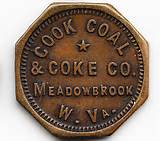 militia of private detectives, or “gun thugs” to enforce and police their coal camps, the paying of wages in the form of company scrip redeemable only at the company owned store, the cheating of miners pay by corrupt scale operators (since miners were paid by the ton), and other injustices that dehumanized and emasculated the miners and their families.
 One of the most celebrated events in our country’s history is the historic Gunfight at the O.K. Corral that occured in Tombstone, Arizona, on October 26th, 1881. In the 30 second gun battle, Wyatt Earp (pictured at left) and his brothers Virgil and Morgan faced off against the outlaw cowboy gang of the Clantons. Thirty shots were fired, three cowboys were killed, and famed gambler “Doc” Holliday and Virgil Earp were wounded. The town of Tombstone still profits from the lore of the legendary battle.
What happened in Arizona can’t hold a candle with the events that occured in southern West Virginia in 1920, though the events share many of the same similarities. At the turn of the century, the industrial revolution was maturing into the behemoth it would later become, the industry that would win two World Wars, and make America the Superpower it is. The whole of American industry relied on one common fuel; coal.
Yes, coal; which is under attack as a dirty fuel, is the prime mover of the entire industrial revolution.
The Industrial Revolution was also a time for great social upheavals, as the rich became powerful and the previously agrarian workforce adjusted and learned to work in the factories and mines. This was long before laws and regulations that protected workers safety on the job or restricted the power of corporations. Workers were left to fend for themselves, and the best way workers found to do this was by organizing union. In 1920, unions were still not sanctioned or protected by the federal government, the Wagner Act still being fifteen years away.
The situation in West Virginia’s coal fields was a broiling cauldren, as miners fought for better treatment and the United Mine Workers sought to organize them. If a miner was caught talking for the union, he and his family were immediately evicted, by gunpoint, from their company houses. Tent colonies appeared deep in the hollows not owned by the coal companies, who had come to the area decades before and cheated landowners out of their land. The tent colonies swelled, as more and more workers, including blacks that were brought in from the deep south and immigrants fresh off the boat, joined the strikers in refusing to work in the dangerous and toxic conditions for such meager pay. These colonies were often the target of ambush attacks by the company hired “gun thugs”, who hoped to scare and intimidate the miners back into the arms of the company.
In the town of Matewan, Sherrif Sid Hatfield pictured below) had tried his hand at coal mining. he knew too well the conditions in those mines and decided to opt out of mining for a career in law enforcement. The coal company carried on evictions all around Matewan, but Sid forbid such evictions within his jurisdiction, often facing off the company’s hired guns. 
In January, 1920, the tense situation exploded. Baldwin-Felts gun thugs, led by the brother of one of the agency’s founders brother, marched through the town of Matewan to carry out evictions and bring force to bear on the striking miners. Sid Hatfield, Matewan Mayor Cabel Testerman, as well as several armed miners met the armed party on the railyard siding in town. Words were exchanged and the ensuing gun battle left ten dead as hundreds of bullets rang out.
The sound of gunfire was no stranger to these mountains, as the Civil War and famed fueders Anderson “Devil Anse” Hatfield and Randall Mc Coy had all happened in West Virginia. Not only that, hunting and trapping had always been and still is a way of life in West Virginia, as well as the frontier explorers who battled their way into the area against native Americans.
 The difference between what happened at the O.K. Corral and Battle of Matewan is that Matewan is part of labor’s history. Wyatt Earp was tried in a kangaroo court for the killings in Tombstone, just as Sid Hatfield was for the ones in Matewan. When the powers that be couldn’t rig the court, they attempted ambushes. Wyatt lost his brother, Morgan, and his other brother Virgil was maimed. Syd Hatfield was ambushed by a spy the coal company had sewn into the ranks of miners on the steps of the McDowell County Courthouse in Welch, WV (grave pictured left).
Both events shone the light of public opinion on unjust situations that forced the United States government to act for the betterment of it’s citizenry, yet only one is celebrated in film and legend.
Congratulations to the Connecticut lawmakers who recognize that it is about time that American children be taught the other side of the story of America!

Young Workers Are The Future For Unions
Trying to get the point of how important having a union in their workplace is a hard sell for many young workers. Unfortunately it’s easier if they moved from the wage theft, hours stealing, authoritarian, and harsh private sector to a union shop. They seem to appreciate what a union can do for them when they were previously denied a voice in their former workplaces. If a young worker has not had that experience, chances are that getting them to engage and appreciate their union can be an uphill battle.
Too many older trade unionists just write it off as a symptom of the generation, forgetting a time when they were young, ten feet tall, and bullet proof. They forget how fine it was to have all the energy and drive of youth, unencumbered by thoughts of rights, poliitics, and all the things older trade unionists were forced to learn over the years.
Most unions recognize this. In the UWUA, we have the Young Worker Initiative, and the Member To Member programs to help build that bridge between generations of union workers. Other unions are doing other things to address this problem, and the National AFL-CIO even has a tab on it’s website that specifically addresses young workers.
Josh Israel has a great article on Think Progress entitled: “Five Ways Unions Are Trying To Get Their Mojo Back.” Josh gives real world examples of what unions are doing to raise awareness of what unions are about, the importance of unions at the local level in the communities they serve, and to fight back the attempts of anti-unionists to portray unions as lazy, out-dated, and non-relevant.
In a cultural atmosphere of greed and looking out for #1, unions have an important part to play in reminding all workers that it’s easy for employers to pick off workers one-by-one, when workers aren’t organized or represented. Even in established unions, all the power a Local Union has in addressing workplace issues flows from the membership standing together.
Solidarity is a word that some pundits have tried to denegrate over the years, conjuring up visions of socialistic or communist overtones. All solidarity really stands for is when workers look out for each other. This can be in a specific workplace, on a local level, state level, as well as a federal level. Solidarity means we stand together regardless of race, creed, or religion so that all of us have a fair and equal opportunity to earn a decent living for ourselves and our families. It means we don’t attack each other, when we disagree we do so in a civil manner of mutual respect, and we recognize the forces against us are big, well organized, heavily financed (usually secretly), and motivated by greed to strip our rights, wages, benefits, and pensions in the service of their own wealth and their shareholders whom they serve. In this paradigm, unions act as an essential balancing factor that works to swing the scales of social justice in favor of those who actually do the work.
An advantage workers have today is a greater access to multiple viewpoints, news, and information thanks to the internet and domains like Facebook, Twitter, and other websites.
The battle for workers rights is alive and well in cyber-space.
Bottom line is: if you are a young worker who finds themselves in a union and have a job that pays well that offers you a path into the middle class and a good living that can’t be easily replaced by quitting and going to work somewhere else, you owe it to yourself to do everything you can to protect that job by getting involved in YOUR union.
If you’re not organized and represented, the only question is why?