When a Member Gets Hurt on the Job
The following is used with permission and UWUA Local 304’s grateful appreciation for our union Brothers and Sisters of the the UE (“UE” is the abbreviation for United Electrical, Radio and Machine Workers of America, a democratic national union representing some 35,000 workers in a wide variety of manufacturing, public sector and private non-profit sector jobs).
UWUA Local 304 would like to point out that the Union Stewards in the UE do much of the heavy lifting of representing the members, whereas in our Local this has fell primarily to the Executive Board. As a young Local, that was a decision of our local, however, it is the duty and responsibility of EVERY member to safeguard the health and safety of each other, as well as protecting members when they are injured on the job.
The UE’s mantra is; “The Members Run This Union”. We of UWUA Local 304 agree with this philosophy , as well as the precepts laid out in the following UE article presented, unedited and in its entirety below:
Issues

- Safeguarding our members from potential workplace hazards
- Ensuring proper medical treatment/filing an accident report
- Warning against employer tricks to avoid workers compensation
- Negotiating a “light duty” policy
- Employer Obligation to Provide a Safe & Healthy Workplace
Your responsibility as a steward
In 1996, 6.2 million workers were injured on the job. That’s 17,000 each day. In that same year, 6,112 were killed on the job, 154 every day! On top of those grisly facts is another: 50,000 workers die each year from occupational diseases.
As horrible as those figures are, they show progress. The number of workers killed on the job has dropped 67% since OSHA was started in 1970. The injury rate has dropped 31%. These figures are for the areas where OSHA was able to set some real standards – manufacturing and construction.
In the service industry, where the Republicans have held up the setting of OSHA standards, there has been no real decline in accidents since 1970. Congress has stopped the setting of any standards on repetitive motion injuries and these have increased in all areas of work, manufacturing, service and construction.
UE stewards have an important role to play in safeguarding our members from potential workplace hazards or when they get hurt on the job. Here are some pointers on what to look out for when a worker gets hurt on the job.
What Should a Steward Do When a Worker Gets Hurt?
The steward must make sure that the worker gets the proper medical treatment, if any is needed.
In some places the steward has had to intervene because the employer wanted to have an injured worker drug tested before they received medical treatment. Medical treatment comes first.
The steward must also see that a proper accident report is filed when a worker gets hurt, even if no medical treatment is necessary.
Why? If a proper report is not filed and later on a worker begins to suffer because of a workplace accident, the worker may have a hard time proving that their problems are related to a workplace injury. Employers hate to have workplace accidents reported because often times their insurance rates are based upon reported accidents. If the employer acts like they are going to blame the worker for the accident, the steward should make a note of any potential witnesses.
The steward should see that the worker is not talked into applying for sickness and accident payments instead of workers compensation payments.
Many employers try to talk workers into taking S&A instead of workers compensation. In the long run it is cheaper for the employer. We have to remind workers that by taking S&A, they are cutting themselves off from future workers compensation payments if the injury proves to be long lasting or reoccurring.
NOTE: The employer is responsible for seeing that workers receive workers compensation in a timely manner. Don’t let the boss claim that the “matter is out of my hands, go talk to the insurance company.” Many times stewards have found that the boss was secretly telling the insurance company to hold up workers compensation payments in an effort to starve the employee back to work. Keep the pressure on the employer.
Health and Safety is a Grievable Issue!
What About Light Duty?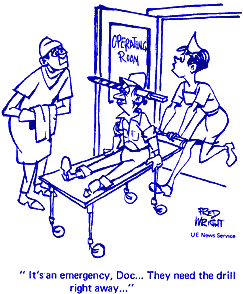
Employers have seized upon the idea of providing “light duty” for workers, mostly to get them back to work, and thereby lowering their reports of long-term injuries.
The employer should negotiate with the union over the establishment of any “light duty” policy.
Because of the employer attacks on workers compensation laws through out the country, many workers cannot afford to stay out on workers compensation. While we understand their desire to return to work quickly, a steward may also have to point out to workers the long-term damage that they might incur by returning to work too soon.
Where performing light duty jobs is not required by state law, the union should insist that it is the employee’s doctor’s decision that is the deciding opinion. Some employers have gone to the extreme of just providing rooms where injured workers sit all day, doing nothing. This is wrong. Often times what a worker needs to recover is rest, not just for the injured part of the body, but for the whole body. Sitting in a room doing nothing is not the same as being home resting.
The employer really is hoping that the worker will get so bored that he or she will beg to be allowed to return to work, even against the doctor’s orders.
If the union negotiates a light duty policy with the employer, it will be the steward’s job to see that it is equally applied. The union has the right to know who the employer wants to bring into work for light duty and who the employer lets stay home.
Many UE contracts have clauses that say that the employer must provide workers with a safe and healthy workplace. In these cases it is very clear what clause of the contract to cite when writing up a grievance about unsafe conditions. If the contract does not have a specific clause concerning health and safety, a grievance can always be filed under the Recognition Clause of the contract. A grievance can also be filed stating that the employer is violating the General Duty Clause of OSHA (Occupational Safety and Health Administration). In some states workers are covered by state OSHA laws. They also have this General Duty Clause. The General duty Clause of OSHA simply states that it is the obligation of the employer to provide a safe and healthy workplace for all employees.
If a worker gets injured and complaints had been previously lodged about the problem with the employer, file a grievance. The union needs to have a written record on cases of employer negligence.
Can a Steward File a Grievance If a Health and Safety Committee Exists?
Yes. Sometimes it is best to try to get the safety committee to take care of the problem, but the Union always has the right to file a grievance over health & safety problems. A grievance should be filed especially if the safety committee ignores the problem.
The stewards must educate and organize the membership to stop employers from paying bonuses or giving out prizes for not reporting accidents.
Employers continue to try to bribe workers to not report accidents. Most times they set up “safety bingo” games, where the prizes get larger every day or week there are no reported accidents. The idea is to get workers to put pressure on themselves and each other not to report accidents. Other employers offer cash bribes to each worker who has no accidents. The outcome is the same. They hope to bribe workers into not reporting or seeking treatment for workplace injuries. Our position should be that safety is not a game.
The steward may have to warn workers who are out from work about employer tricks to cut them off workers compensation.
Many employers routinely hire private investigators to spy on workers who are collecting workers compensation. They sneak around trying to take photos of workers to prove that their injuries or disease are fake. What should workers do to protect themselves? If a doctor prescribes light exercise for a worker who is out with a back injury, that worker should get it in writing from the doctor. These private spies love to take photos of workers doing light work, such as raking leaves. They then use these photos to disqualify the worker or have them fired.
What about part-time work? Many workers have part-time jobs. Tell them to get written clearance from their doctor that it is all right for them to work their part time job. The doctor’s note should say that the part- time work is such that it will not aggravate the injury.
The steward may also have to let the worker know what their responsibilities are to the employer.
In most states workers have to regularly update the employer about their condition and any expected return to work date. The steward should let the injured worker know this, BUT also urge the worker to report to the union any harassment he or she receives when reporting in to the employer. The employee may also be required to see a doctor of the employer’s choosing to confirm the employee’s doctor’s diagnosis. The steward should make sure that the union member knows this BUT also make sure that they know that they have the right to keep seeing a doctor of their own choosing.
NOTE: Workers Compensation laws are different in every state. Whenever possible each UE Local should have at least one person who is an “expert” on the exact laws.
Moving Forward With a New Attitude!
Your union has a lot going on. While we have bargained our next contract, waiting for results of past arbitration and preparing future ones, filing unfair labor practices against the company for unfairly jockeying schedules, updating our union’s By Laws, and finding us a new permanent union hall.
Most of all, we are done apologizing for being UNION, and it’s time the membership adopted a new attitude and make this union what we need it and want it to be. The most effective weapon organized labor has in it’s arsenal isn’t the backing of the National, or the lawyers on retainer, or the right to file charges; it is and always will be SOLIDARITY!
You want a better contract, then you have to pull together with everybody else to make it a reality and give our Bargaining Committee the support they need to bargain from a position of strength, knowing the membership has their backs.
While workers across the nation are fighting to bring a unions into their workplaces, there are many union members shamefully taking the road offered them by union busting state legislatures who pushed Right To Work laws on workers. Laws handcrafted by the nefarious American Legislative Exchange Council in nice little ready made packages to kill unions, prevailing wage, and other protections workers have taken for granted for decades.
UWUA Local 304 has to get organized and active in this fight because all of us, collectively, have too damned much to lose if we don’t
Many members are familiar with the United Mine Workers, and lament that we as Utility Workers, don’t strike the same kind of fear in the hearts of corporate America that the UMWA has. That wasn’t gave to the miners, they fought for it for decades. They didn’t ignore the boss when they committed gross violations of the C.B.A., they filed grievances, arbitrated, went to court, jail, and marched in solidarity.
The unions that work in our plant are carefully shielded from 304 members. Why?
That’s because many of the contractors we host in our plant have been union workers for a long time. Management’s worse fear is that Harrison employees learn and start to act like real union workers.
You don’t have to disrespect management, or be hard to work with, but you don’t have to live in fear of them either. You have rights as a union member, but it’s up to you to know and exercise those rights. This begins by knowing your Collective Bargaining Agreement, attending union meetings, and raising hell if you have too.
Right To Work was passed to destroy unions, but we are countering by getting stronger through organization and education of our members, and through cooperation and collaboration with other unions.
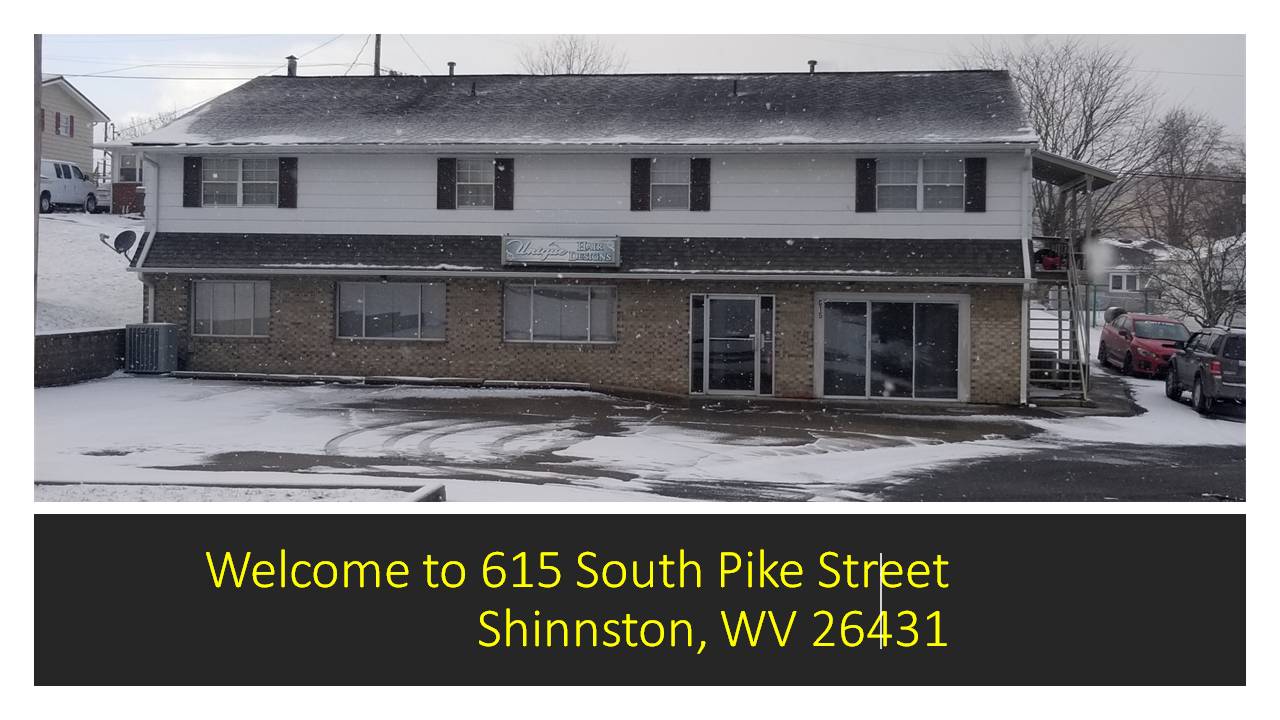
UWUA Local 304 Has a Home!
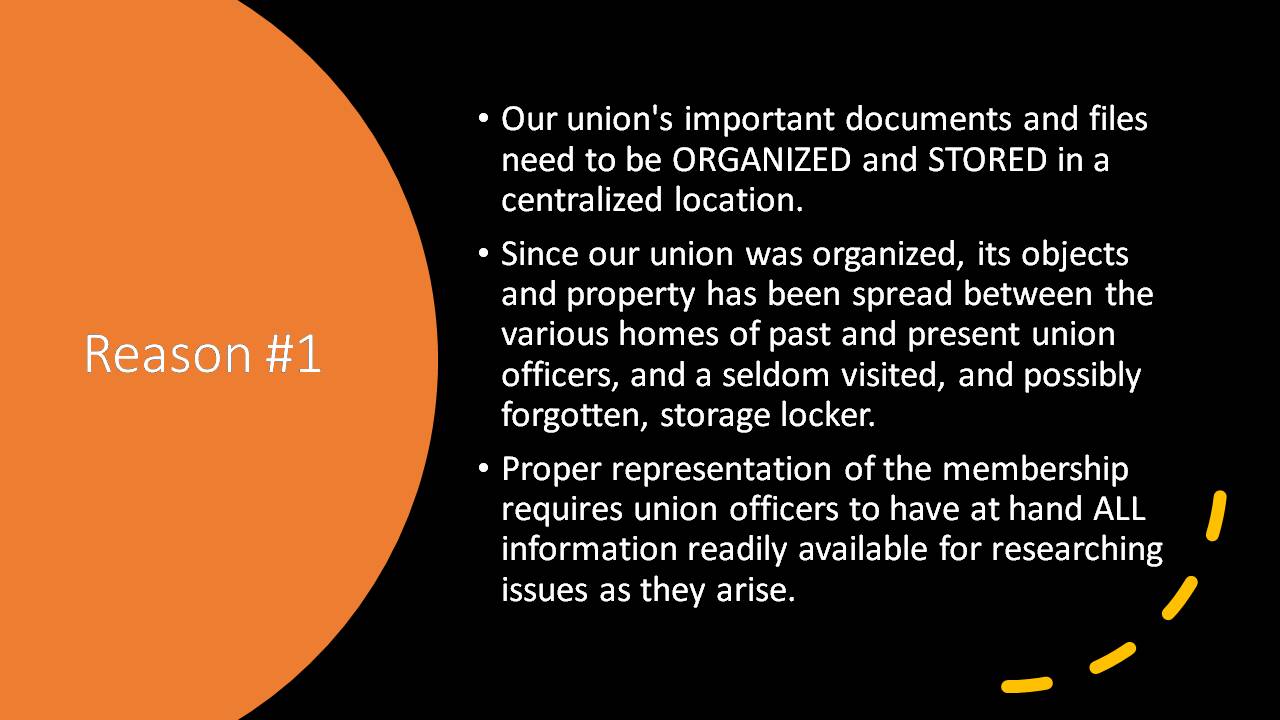
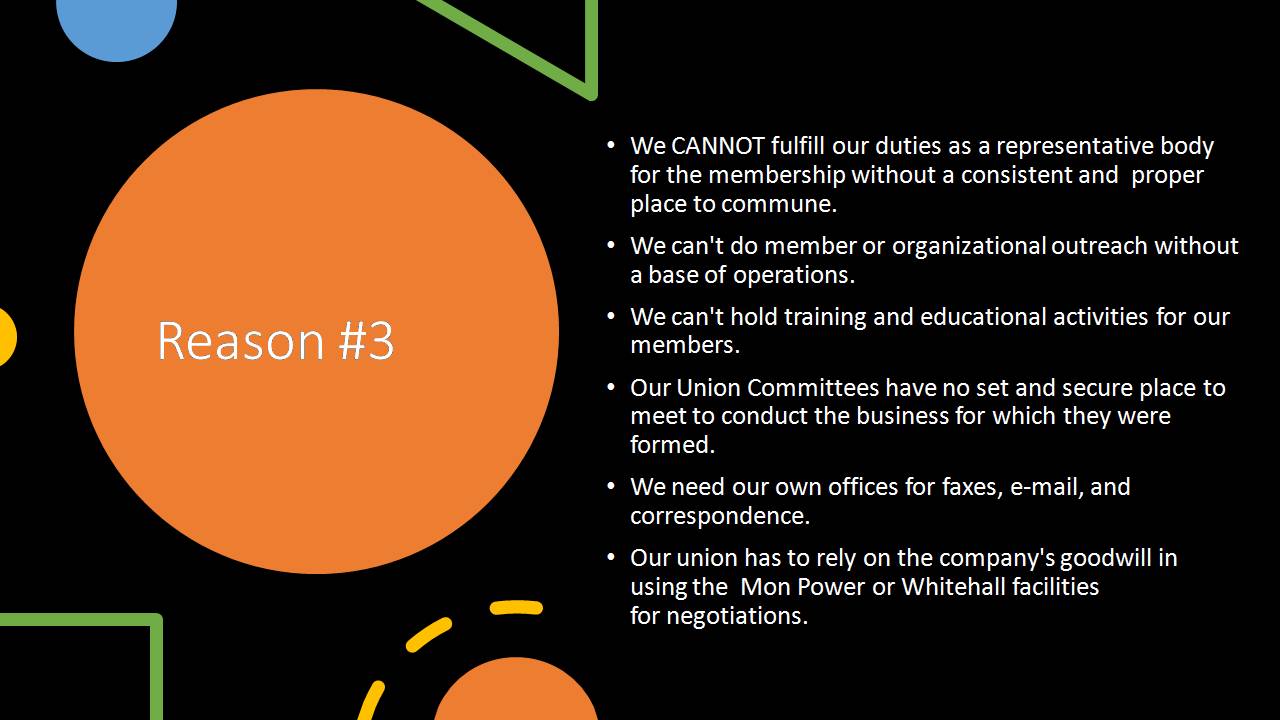
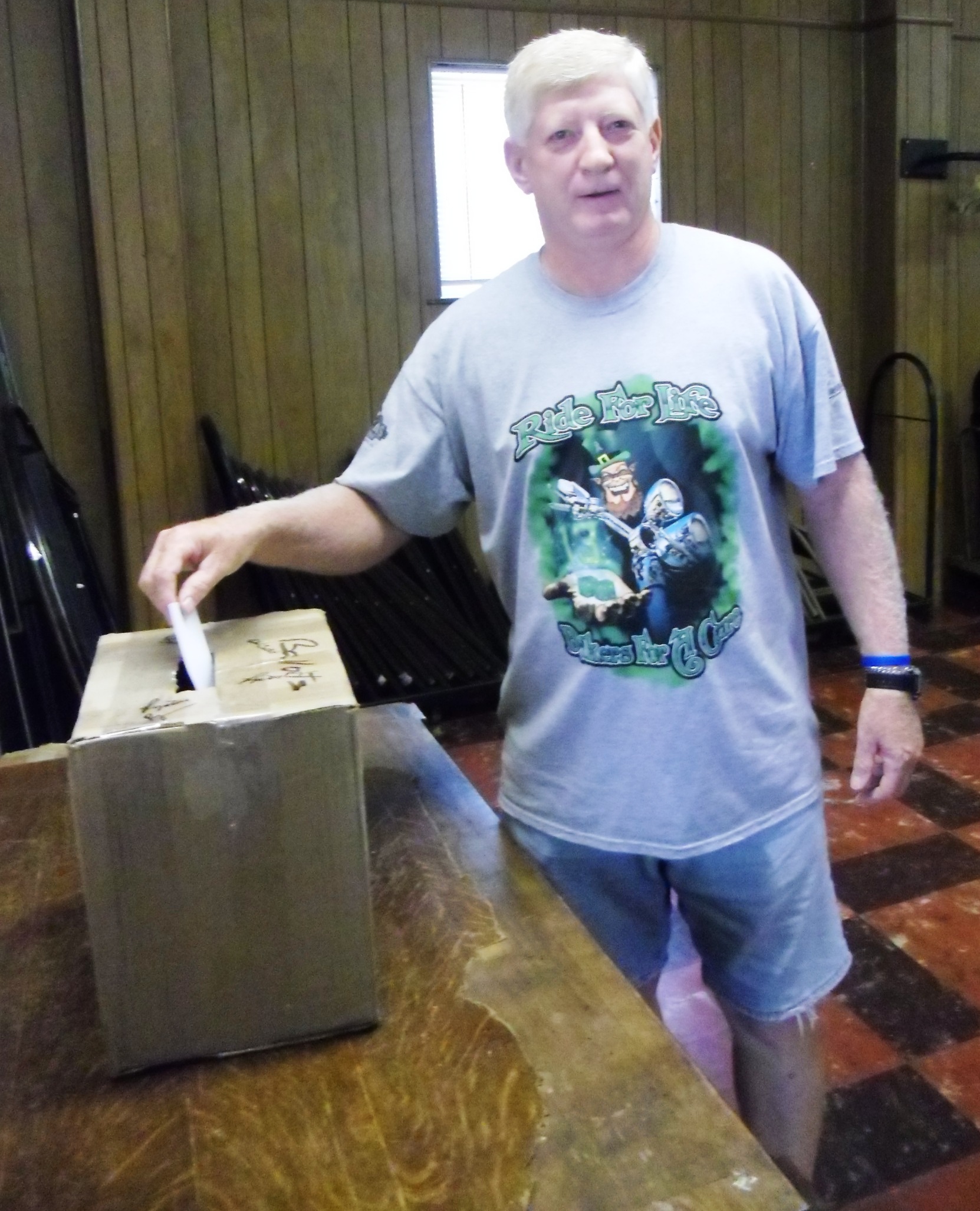
In an overwhelming majority, UWUA Local 304 members voted almost 4 to 1 to establish it’s 1st ever Union Hall home!
West Virginia’s White-Washed Heritage
The power of the media to shape public opinion has always been with us since the foundation of our state, as well as our country. You could liken our nation’s founding to a union organizing drive, with all the elements of an indifferent and unresponsive ruler, his cruel and brutal lackeys, brave agitators and organizers who speak out in speech and print against injustice, and those under the thumb of the ruler who dare rise and and demand a better lot in life.
West Virginia was born out of internal strife within our union of the United States due to inequalities between the wealth of the industrializing northern states and the predominantly agrarian, slave holding, southern states. The West Virginia economy was more tied to that of it’s northern neighbors of Ohio and Pennsylvania, so the newly hatched state sided with the Union, with it’s first capital established in our northern panhandle of Wheeling. The reality was that the divide in our country was a bleeding gash right across the middle of our state, with the first land battle famously being fought in Philippi.
No doubt had the Confederacy won, Virginia would have reasserted it’s control over it’s western rogue territory, or, had those forming our state had sided with the southerners, the battle lines for the Civil War would’ve been redrawn and the survival of West Virginia as a separate state would have been highly doubtful.
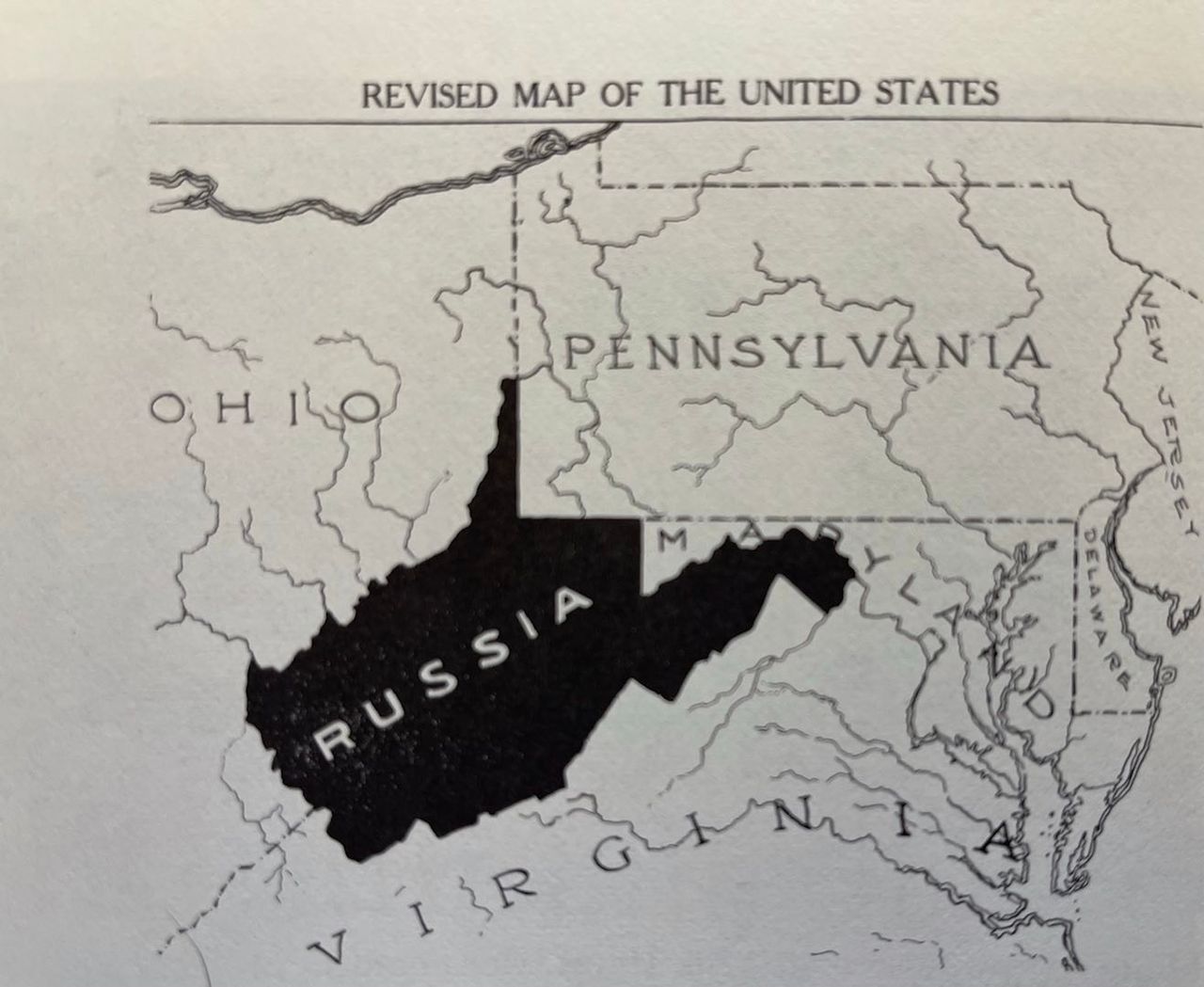 Since 1865, our state has yet to establish itself as an integral part of the fabric of America and distinguish itself with a unique culture and identity of our own. This despite the many famous people born in or with strong ties to our state. Educators Booker T. Washington and Henry Lois Gates; novelists like John Knowles, Stephen Coonts, or Jebediah Purdy; famed aviator Chuck Yeager, WWII Medal of Honor recipient Hershel “Woody” Williams, and Basil L. Plumley who featured prominently in the Vietnam War movie “We Were Soldiers“. We’ve had our share of other famed entertainers and sports figures. Coaches Lou Holtz, Jimbo Fisher, and Nick Saban all hail from West Virginia, as well as entertainers Steve Harvey, Ted Cassidy (Lurch from The Adams Family), Morgan Spurlock, John Corbett, Virginia Egnor (Dagmar), Conchata Ferrell, Kathy Mattea, Peter Marshall, as well as many others.
Sadly, if you ask someone unfamiliar with our state, they will inevitably identify us as progenitors of the Hatfields and McCoys. Those famed feuders have long, and wrongly, been stereotyped as backwards, uneducated, crude, hard-headed, moonshine drinking hillbillies. Anybody actually familiar with the circumstances of the troubles between the two families know it was a tale that included politics, business, and power between two determined and shrewd patriarchs of rugged pioneering dynasties in direct opposition to each other.
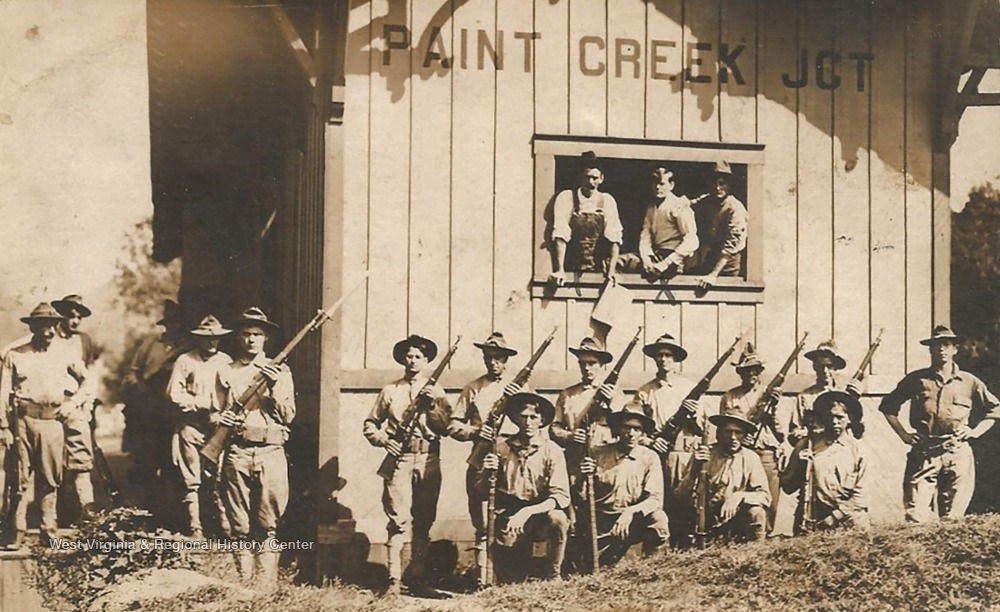 That’s where the story of West Virginia ends, as far as what the rest of the country is concerned. The media has portrayed us by those long set preconceptions, as we labored quietly powering the country by harvesting and selling off our abundant natural resources, with the hard work of our fellow Mountaineers.
But why quietly?
It has been said that history is written by the victors, which explains why no other perspective has ever been offered to counter the notion of violent and stand-offish inbreds who sit around on their front porch spitting tobacco and taking potshots at neighbors as well as strangers who dare enter their domain.
 Truth is, the Hatfields and McCoys are a relatively harmless and safe piece of our heritage that the media has edited, massaged, and expounded on for easy consumption by the American public. It’s a multi-layered story that can be safely tapped into to siphon off profit in literature, movies, and by marketing the lore surrounding those colorful characters involved in the long running dispute.
True West Virginia heritage and culture is firmly rooted in America’s labor history and unions. It’s a taboo subject that those of power and influence have sought to erase, hide, or gloss over in our society.That’s why you get Hatfields and McCoys, not Frank Keeney and Fred Mooney, you get Thomas “Stonewall” Jackson and not “General” Bill Blizzard, you get the “Mothman” and not “Mother” Mary Harris Jones. On a larger scale, there have been a multitude of movies depicting the gunfight at the O.K. Corral, but only one notable film that depicts the Matewan Massacre; plenty of gangster movies showing one group of mobsters against another, while The Battle of Blair Mountain remains shrouded in murky history and legend. They give you Jesse James, when what our nation sorely needs is Sid Hatfield, who battled and died in the service of others and not for his own enrichment; sure, everyone knows the names Al Capone and John Dillinger, but not John L. Lewis, Eugene V. Debbs, or Joe Hill.
So why is such an important piece of our West Virginia, as well as American, heritage being suppressed?
 It’s because the “great” industrialists who wrongly get the credit for building our country wish it so. Men like Andrew Carnegie of US Steel, or John D. Rockefeller of Standard Oil, Financier Jay Gould, J.P. Morgan, the Vanderbilt railroad empire, Henry Ford, and many others and their sycophants would have to answer for the crimes they either perpetrated themselves or, as more the case, had their heavily bribed and corrupt politicians, policemen, and thugs. Heavy-handed Baldwin-Felts detectives the coal mines employed as private security, as well as enforcers, and more the same for the Pinkerton Detectives. If these forces were too small, the rich could always rely on a corrupted county or statehouse to dispatch Sheriffs Deputies and their posses, the State Police, and even the National Guard to beat back workers who refused to be shackled into economic and perpetual slavery at the hands of their employers.
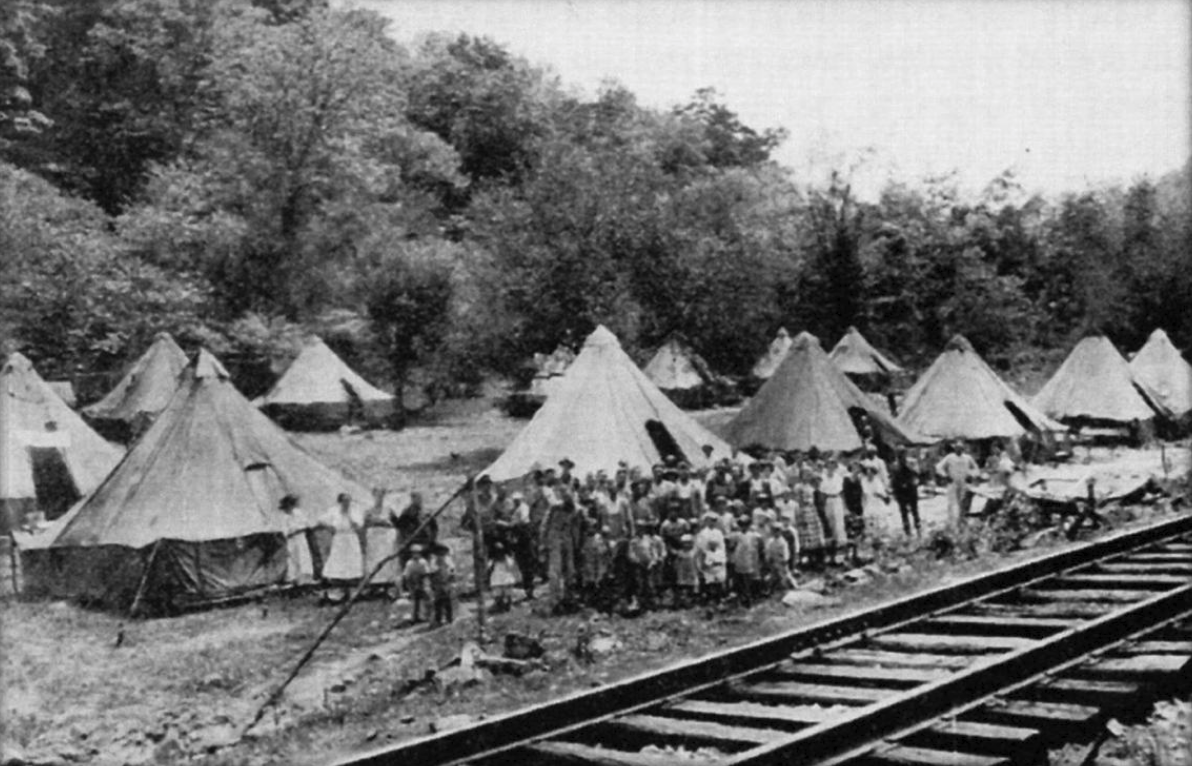 A shameful number of men, women and children were assaulted, maimed, starved, or killed at the hands of employers they served. Here in West Virginia, mothers and fathers were thrown out into the street with all their belongings and left to the mercy of the elements because someone told a gun thug the worker possessed, talked about, or supported the union. These families were forced to the backs of hollers with nothing between them and nature but a thin canvas tent. In those small clusters many died of starvation, disease, exposure, or the frequent bullets that seemed to always be flying around.
Whether it was the Pullman Strike, the Triangle Shirtwaist fire. the Haymarket Riots, the Paint Creek and Cabin Creek strike, the Ludlow Massacre, or many other major eruptions of frustrated and desperate workers, the masters of business and industry would have a lot to answer for. The indiscriminate beatings, destruction of property, denial 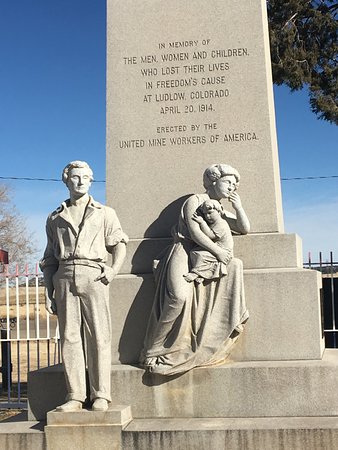 of constitutionally granted rights, subversion, spying, and almost any other indignity that can or can’t even be imagined.
The war goes on today. Powerful forces have used their media mouthpieces, slick political lapdogs, and vast sums of money to pit neighbor against neighbor, American against American, and justify their treachery both in court and in front of the news cameras. All the while they incrementally push the working class closer and closer to the coal camps they left only a couple of generations ago, while proclaiming themselves servants and pillars of Christianity.
How bad is it?
The tern “redneck” used to refer to the red kerchiefs strikers wore to recognize friends from foes, but now it’s used in a derogatory sense to indicate the ignorant and uncouth. They call trade unionists communists, socialists, and/or fascist to the point that, though describing different political philosophies, the words have mutated into synonyms for each other.
To clear this up, a fascist is one man at the top calling the shots and holding all the wealth themselves. A communist believes no one should be rich, A capitalist believes in oligarchy, made up of many want to be fascist willing to sacrifice anybody as long as it increases their coffers. A socialist has no problem with people being rich, they just believe in a wealthy society no one should be so poor that they cannot live.
Before unions, every employer was a fascist; “my way or the highway.”
Many try to paint unionism as socialist or communism (which is not true since you can’t be either and belong to an American union), but what unions actually do is bring democracy to the shop floor, for every worker equally.
To fight this trend, working people have to actively search and study their missing heritage for themselves and reclaim the rights granted them by the blood and tears shed by men, women, and children for all workers to have a better life for them and their families.
Let this be your New Years resolution!
Merry Christmas and Happy New Year!
Things You Need to Know about “Right to Work”
So far, 28 states have enacted RTW (Right To Work) laws, predominantly in the South and Southwest. While right-to-work laws have nothing to do with rights, work, or guaranteeing jobs for workers, some in the business community view it as a strategy for attracting new businesses to locate in West Virginia, despite its downside risks of lowering wages and hurting unions that helped build the middle class in our country.
Here are five important things you need to know:
1. It’s about lowering wages and eroding workplace protections. As an economic development tool, the professed aim of RTW is to reduce the power of unions by depriving them of resources (dues), which ultimately weakens the union and strengthens the employers’ hand in bargaining for lower pay and benefits. By decreasing the likelihood that businesses will have to negotiate with their workers, this will lower labor costs, reduce the cost of doing business, and will supposedly be an incentive for out-of-state manufacturers and other businesses to locate in West Virginia. If RTW didn’t lower wages and weaken workplace protections across the board, there would be no incentive for companies to move to West Virginia. This, in a nutshell, is the hope of RTW supporters such as the West Virginia Chamber of Commerce.
2. Academic research is unanimous that RTW reduces unionization. While there is no strong evidence that RTW laws help or harm a state’s economy, there is a broad academic consensus that it weakens labor unions. If this happens, it could mean even worse economic and social outcomes in the state. This is because unionization is strongly associated with higher economic mobility, less income inequality, higher wages, safer workers conditions, better benefits and larger voter turnout.
3. The WVU report on RTW is fundamentally flawed. While a recent study by John Deskins at West Virginia University concluded that RTW would boost jobs in West Virginia, the study is fraught with basic design problems. For example, the WVU study misidentifies that Texas and Utah adopted RTW in the 1990s, when both states adopted RTW before 1960. The WVU study also failed to adopt a standard academic practice that accounts for unobserved differences between states, such as the advent of air-conditioning in the South, access to oversees markets, and other important state characteristics. When researchers at the Economic Policy Institute accounted for these problems and replicated WVU’s findings, they found no relationship between RTW status and employment growth. Tim Bartik, an economist with the Upjohn Institute and one of the country’s leading economic development experts, recently reviewed the WVU study and concluded that it “does not provide any convincing evidence that a state that adopts RTW laws will, as a result, experience faster job growth.” The flaws with the WVU study highlight why state policymakers should not rely on its conclusions to adopt RTW.
4. RTW is not about “workplace freedom.” While RTW proponents define ‘workplace freedom” as letting workers opt out of paying a representation fee to pay for the benefits they are receiving under any negotiated union contract, most would define workplace freedom as being treated with dignity and respect on the job. That means getting paid an honest wage for an honest day’s work, and having access to benefits such as paid sick days, paid family leave, health care, and a retirement plan. The only freedom workers would receive if RTW were enacted is the ability to get something for nothing.
5. Low workforce skills are the central reason for West Virginia’s economic woes, not lack of RTW. A recent in-depth study by the Center for Business and Economic Research at the University of Kentucky that explored why the state is so poor found that the shortage of skilled workers – not RTW – was the central reason for the state’s relative poor economic performance. Since West Virginia faces many of the same social and economic problems as Kentucky, policymakers would be well advised to promote polices that improve the skills of the state’s workforce instead of RTW that could reduce workforce training.
The legislature in West Virginia must learn that we can’t build West Virginia by tearing down working families and unions. Instead we need to focus on the policies that we know work, such investing in early childhood education, research and development, higher education, workforce training, and effective ways to help more people get out of poverty.
The Passion of Those Who Support 304
The reason union organizing drives and drives to de-certify a union can get so tense and adversarial is because those who favor unionization are passionate about it and willing to stand up and defend it.
The act of forming a union, especially in this day and age, is an uphill battle. Corporations have shown a willingness to spend millions of dollars to deny workers the right to organize by hiring mercenary labor relations firms who basically come in and take over managing the plant and galvanize every company manager and supervisor against the organizing effort. They will bend the rules, to the point of breaking, and enlist fear and division to strong arm the workers into voting against their own best interests to reject being union.
 UWUA Local 304’s story is a great example of workers demanding a say in the workplace that sustains them.
Monongahela Power Company was an old, solid, and respected utility back in the days when companies were based locally and they took active and positive interest in the customers they served and cared for the employees that made them successful. These were the days when the Plant Director actually had the authority and power to make decisions at the local level and the integrity to reject initiatives from company stooges that were not in the best interests of the plant or people. Many of the old veterans of Harrison Power Station described the atmosphere created by that kind of leadership as being a part of an extended family of working people with the noble mission of keeping their neighbors safe by making sure the electric stayed flowing.
Then along came Allegheny Energy, which consolidated many small local utilities into one conglomerate. This was the era of Enron and de-regulation that stoked the greed of opportunistic business men and got them interested in utilities. You see, before all that happened, most utilities were thought of, in the financial world, as stodgy widow and orphan stocks that reliably paid meager dividends and were run by dull geeky engineering types with thick glasses and pocket protectors.
The employees of Harrison helplessly watched as the money men took over, the old management was retired and replaced with “yes men” who blindly took orders from the home office, and soon the company was “diversifying” into unfamiliar “ventures” while the discipline and money that kept their primary mission of making and distributing power went away.
While the business executives looked for ways to leech every dollar out of the company, this led to years of high handedness by local management, favoritism, nit-picking, wage disparity, and the workplace being dominated by backstabbers, double dealing, and infantile behavior of managers with huge unchecked egos; the employees said enough is enough and began organizing.
Of course, just saying you’re organizing can get you fired in many shops, and always paints a target of the back of those who carry the fight. The workers at Harrison were no different then as they are now, except maybe a little older. They were all people who had wives, kids, grand-kids, mortgages, car payments, and all the normal pressures many of us still have, but they believed in the need to draw a line in the sand and have a voice in their workplace.
Anyone who has never been through an organizing campaign can never understand the kind of stress these people endured or the amount of risk they faced just for standing up and exercising the often denied right to form a union. Those who went through this came out as brothers in arms, veterans of the war on workers.
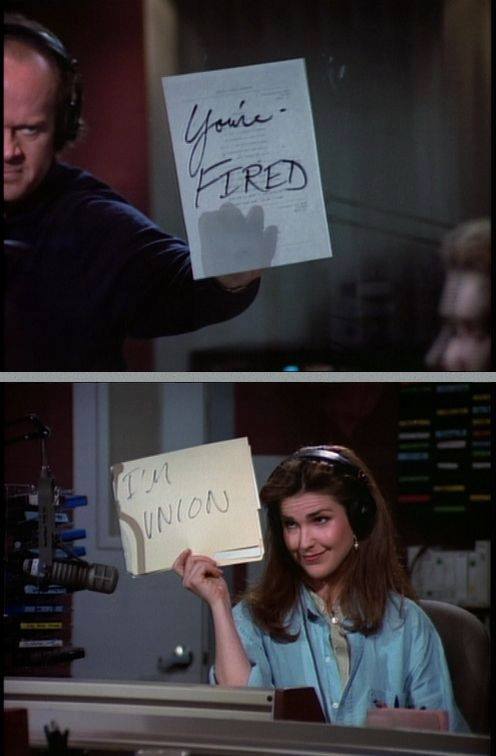 That’s where the passion comes from. It came from workers standing together and doing something meaningful to protect the jobs each one relied on. When anyone who participated in that feat hears someone bash the union, threaten to vote it out, or flippantly assert that all they have to do is vote a union back in if they don’t like being non-union , it really ignites a fire in them because they lived through what it takes to get a union in place so that we can deal with our corporate owners on a fair and even plain.
Kid yourselves if you want to, but doubt runs high that anyone who would work to break a union could ever muster the kind of courage it takes to organize a successful union drive, even if another union would have us after de-certifying, which is highly unlikely. A union is about looking out for each other, while breaking a union is about a few individuals pursuing interests that only benefits them at the cost of everyone else.
Be smart- STAY UNION!
Labor Day Is About U(nion)!
Which of these do you currently have:
___ Homeowners Insurance
___ Automobile Insurance
___ Health Insurance
___ Life Insurance
If you checked ANY of he above, have you considered protecting the ONE thing that allows you to afford coverage for the things you’ve worked so hard for?
Wouldn’t it be nice if you could have job insurance? The kind that protects your job from unfair persecution by those above you with whom you may disagree, protection against being unjustly accused or even fired?
That’s what a UNION is! If something just arise at work that threatens your earning ability, whether that be an overtime issue, a seniority issue, or disciplinary actions against you that affect your wages or job; a UNION is the only mechanism you have to effectively fight any of the above, and more.
Corporations have entire departments for their legal protection, heavily staffed with attorneys, para-legals, researchers, and staff, and ready to jump to the defense of the company at a moments notice. Don’t you, as a worker, deserve the same resources if your livelihood is threatened?
Now, out of the insurance coverage types listed above, which gives you a refund if you don’t use them. Do you get you homeowners premiums back if your house doesn’t burn down? Do you get your car insurance money back if you don’t crash your car? Do you get any type of rebate or refund on your healt or life insurance if you don’t get sick or die? The answer is, “NO!”
Even if you don’t attend your union meetings or take advantage of any of the benefits that being in a union offers, at the very least, you still have the resources and experience of a national organization and local representation who will fight for you.
Here’s the kicker, except for the last few years, union dues have been tax deductible. If the current Administration has it’s way, they will be again.
If you think you can decertify a union and then just vote one back in if you don’t like the changes that happen afterwards, then you have no idea how hard and brutal a union organizing campaign is. The UWUA invested years and money in Harrison Power Station joining them. When a union decertifies, no other union wants to affiliate with a workforce that exhibited such reckless and short sided view of their workplace and their role in it. They won’t.
If you are lucky enough to belong to an established union, Labor Day is all about YOU!
Dissemination of Information
There are some people who may ask what YOUR union uses as a basis for the information we put out to the membership.
In an age when information is used as a weapon to manipulate and control people’s thoughts and actions, it’s a fair question to ask.
The answer is simple, we are part of a network that has over eighty years of experience, the Utility Workers Union of America, and the lessons learned in bargaining three contracts, one of which was turned down twice, and two that we adopted and worked under since we became a union in 2010.
When we tell the membership the things they could lose or that may change, it’s based on past negotiations and actual proposals YOUR union has seen presented to us over the past decade.
What would happen if UWUA Local 304 would go away?
Anybody who tells you that they KNOW what will happen is a liar. Truth is, nobody knows for sure.
 When 304 was organized, the general consensus among those immersed in the effort was that we were being bought just for our Transmission and Distribution within the lucrative PJM RTO.
When this opinion was shared with those less informed, they laughed, pointing out all the large and profitable plants in our system, and how THEY were the real assets.
Here we are in 2021, and no one is laughing anymore. There is nothing funny about closed plants, displaced workers, and less reliable and secure generation being readily available too feed America’s hungry power grid.
In these uncertain times, it’s YOUR union that maintains a certain amount of stability for our members. With our CBA’s Successors and Assigns clause, and language concerning furloughs, layoffs, and bumping rights; it doesn’t matter what company’s sign is out in front of the plant, our members can rest assured that if there’s smoke out the stack, they will have a job.
You can ask, “what has the union done for me?”
At the very least, YOUR union has kept the wolf from the door in a time when coal is being attacked, companies are being bought and sold, and times are less than certain.
Dues Paid vs. Paying Dues
UWUA Local 304 has seen many changes in it’s eleven years of existence, one of the most remarkable is the amount of retirees and new faces we’ve had. Many of the ‘old-timers’ who were around when 304 was organized are now gone, and not enough remain to inform and educate our new Brothers and Sisters about conditions that existed at Harrison before the union and what many members endured when organizing 304.
 After Allegheny Energy flirted dangerously with bankruptcy, and the stock price plummeted, the managers credibility at the plant took a hit when it came to preaching the gospel of the company and the evils of a union. Not surprisingly, it was soon announced that we were “merging” (a.k.a. being bought) by First Energy. FE was a total unknown to most of us who knew Duke, AEP, Dominion and other power company’s adjacent to our service area.
Harrison employees banded together, shared what they learned of our new owner, and decided that organizing with the Utility Workers was the best chance to protect their wages, benefits, and working conditions at our plant. However, our new owner had their own plans.
What followed was a bitter campaign for the organizing committee, assisted and advised by the UWUA, against the expensive and ruthless hired guns of the company who aggressively sought to defeat and confound the efforts in unionization.
There were the standard tactics of captive audience meetings, one of which featured outgoing Allegheny millionaire CEO Paul Evanson, as well as one on one meetings between managers and employees to exert enormous pressure on each individual to vote against the union.
In addition to the standard litany of half-truths, distortions, and outright lies, there were even more nefarious actions taken against union supporters. Some of the more outrageous examples of these were:
- a senior and respected maintenance man was sent home for three days, without pay, for an act of insubordination when accused of throwing a booster fan door. The membership took up a collection for him.
- an operator who was also given three days off for tripping the wrong breaker on an offline unit. Another collection was taken up.
- a coal handler who was fired for a vehicle accident on the coal pile. The union fought and saved his job.
- a manager/supervisor who telephoned an employee’s wife to lie to her that her husband really wasn’t working the overtime he claimed to her that he was.
- there were man other acts of intimidation committed, both known and some not, many consisting of aggressive management making mountains out of mole hills.
 If an employee was a known union supporter, they were painted as a target and faced an all out assault by management to make them seem disloyal, dishonest, and incompetent, all at the direction of their high paid union-busters.
Harrison employees knew the only real power a union has is when they all stick together, and they did. They put it all on the line; their careers, benefits, retirement and reputations to endure and support each other during these tumultuous times.
In the end, Harrison employees voted for the Utility Workers Union of America as it’s exclusive bargaining agent with the company, which locked all the things that made working at Harrison a good job into what was called “status-quo”. This basically meant that First Energy could not just come in a make huge changes that affected the newly established bargaining unit without those changes being bargained and agreed to by the union.
 This started a second act of intimidation, abuse, and delaying tactics in reaching a contract. It took four years, in which time the company attempted to deny wage increases and variable pay/Short Term Incentive pay due to employees, while chipping away at the state of status-quo that they were legally binding to observe, but ignored.
This forced the union, through our first elected Executive Board, to take many complaints of the company’s actions to the National Labor Relations Board (NLRB). In the meantime, while legal battles raged, the company attempted to de-certify the union by petitioning for another union vote. To their great surprise, this vote revealed a growth of support FOR the union compared to the initial vote.
 After almost four years, a $1.25 million dollar judgement against the company won by the union and a contract bargained with 304’s second bargaining committee, we began the process of being a union.
UWUA Local 304 started with a federally mediated contract as it’s foundation, something that rankled many members who came from other long and well established unions with contracts built and evolved over decades.
Paying dues is the first thing those who knock organized labor seize on when arguing unions. The reason is simple; being union gives you the legitimate legal status to act, but doesn’t pay for representation when you do. That is why we pay dues to pay our own officers when acting in our behalf and legal counsel to support us when we need it.
Never forget about the dues already paid by those who came before that affords you these rights. Take them for granted and they will be gone. Union power is derived by a united membership all pulling together.
Read the article that appeared in The Utility Workers magazine in December, 2001, about Local 304.
Management Schemes Part 3 – Putting Together a Plan
Imagine this. The personnel manager calls a meeting with the union committee one day and makes the following announcement:
“Because of increased external and internal competition, we have to make some changes around here. Starting next week, we will begin to implement direct flow technology with elements of kaizan layered in. We’ll all work together on this so the self- directed teams will begin immediately to exercise their empowerment and direct the reorganization.”
The union committee says “What?”
To which the boss replies, “We don’t know the details of what this means, it’s up to the employees, but to help facilitate the process we have hired the consulting firm of Speedum & Up. They will facilitate the entire process.”
What does the union do when the employer approaches the union with a management scheme like this or like any of the others that the UE Steward has outlined in the last two issues?
- Stop, think, analyze;
- Assert the union’s rights as collective bargaining agent;
- Ask questions, and demand answers;
- Analyze and figure out what the employer really wants;
- Discuss problem with the union members, stewards, national union representatives;
- Educate the union members, stewards if necessary;
- Decide what the union wants, and make a plan;
- Negotiate with the employer and get an agreement in writing.
If the employer bypasses the union and begins to implement a new program, then the union must immediately go to step two and assert the union’s rights as the sole and exclusive collective bargaining agent.
The employer should not be meeting directly with employees or with selected groups of employees if they are discussing anything that could impact wages, hours, and conditions of employment. They must first meet with the union committee. Be assertive about this. Demand that the meetings cease until they meet with the union. Do not agree that they will allow the union to sit in on the meetings as they happen. If the employer goes ahead and starts holding the meetings, then file a grievance (file it as a violation of the Recognition Clause/refusal to recognize the union) and attend the meetings so the union knows what is going on.
Now for some details on the steps listed above.
1. Stop, think, analyze
When the employer approaches the union about implementing a new program, the union committee must insist upon having time to sit down and think about what the employer has proposed. Employers will often try to rush the union into making a decision, thus hoping to get the union involved before it knows what is going on. One ploy of employers is to say they really don’t know what they want, they just want to try something different. Employers know exactly what they want, count on that. In contract negotiations the union usually takes a caucus after the employer makes a proposal, to discuss among the committee what the proposal really means. This is no different.
2. Assert the union’s rights as collective bargaining agent
Make sure the employer understands that no changes will be made to existing conditions without the union’s approval. Depending on past practice and specific contract language, the employer might be able to make some changes, but major changes in production methods usually run into contractual language. This gives the union power. If you’re unsure about the rights the union has, contact the UE Field Organizer assigned to your Local.
3. Ask questions, and demand answers
Get as much information as you can in writing. Often times they will have a manual that has been prepared for them by some consulting company. Demand a copy. These manuals are often very frank in stating what the employer should get out of the program. It might describe exactly how they will speed-up production, eliminate employees, or bust the union. Ask as many questions as you can and follow-up in writing. Make the employer reveal their intentions. Ask for names of other employers that have implemented this program.
The employer has answers, don’t let them kid you. If you think the program could cause changes in the production flow, ask to see the plans for redesigning the work flow. If the employer insists that they have no preconceived plans, that they don’t know what they want, tell them to come back to us when they do know what they want. Does the employer want better quality, faster production, cheaper production, better delivery of services? If they tell us what they want perhaps we can do something, BUT we will want guarantees in return. NO layoffs, no job cuts, no sub-contracting, no anti-union campaigns, higher pay, more training, job security, etc.
4. Analyze and figure out what the employer really wants
Once the union has gathered as much information as possible it is time to sit down and analyze what the employer wants. There are many factors to take into account.
If the employer has a history of anti-union behavior, then it is reasonable to be suspicious of any proposal they make. Do they really have a problem with quality that they want to fix, or is this just an excuse to start quality circles to divide the union members?
Make a list of what is good about the program (if anything) and what union members should be concerned about.
For example. The employer proposes a “pay for knowledge” program, where the more jobs a worker learns the more pay he/she receives. To many workers this sounds good. Extra pay is always welcome and finally the employer is willing to provide on-the-job-training.
The union lists the problems. What if a senior employee doesn’t want to learn extra jobs? Who gets laid off, a less senior employee with multiple skills or the senior employee with only one skill? Who gets the extra training? Does it go by seniority? Does everyone get extra training if they want it and get extra pay all the time? Does the employer really just want to offer this to his pets? With many multi-skilled workers who can be transferred to many jobs, will this cause permanent layoffs?
5. Discuss problem with the union members, stewards, national union representatives
The national union can provide many resources to help the local analyze the problem and come up with a plan of action. There are workshops available on cell manufacturing, Just in Time and other programs. It is important to get input from the union stewards and members as to what they think is going on. The committee must know if the supervisors are out working the floor, making promises to the membership. The strength of the union comes from its unity and organization. If members, officers and stewards are running in different directions, then we lose.
6. Educate the union members, stewards if necessary
Often times the employer’s plan may sound good to the membership. Vague promises of more money or job security get inflated when they are run through the rumor mill. The union may have to conduct an educational campaign as to the real nature of the employer’s proposal. Meetings, leaflets and lots of work by the stewards may be necessary to keep the membership united and on the right track.
7. Decide what the union wants, and make a plan.
If the union decides that the best approach is to just say “no,” then that is the plan. The union will have to be prepared for the employer not taking “no” for an answer. This can work if the membership is unified and understands what the employer is really up to. Part of any plan, the most important part, will be to figure out ways that the membership can express its opinion. Stickers, buttons, rallies are very important.
Often times we need a more complicated plan. The employer might have contractual language that will allow them to implement their plan. If that is the case then the union needs to figure out what to do to safeguard the members. The plan must include how the members will be involved in the company program.
In one UE shop the employer wanted department teams to make plans for improving production. The union’s demands were as follows:
- The union membership elected team members and could recall an elected team member.
- The union officers and department steward could attend every meeting.
- Union members could meet in caucus without management or a consultant present.
- The teams could not implement any changes in the department without a membership vote.
- No changes could lead to any layoffs.
- Any changes that affected the contract had to be negotiated by the union committee and voted upon by the membership.
What the employer really wanted was speed-up and layoffs and thus was stymied by the union’s conditions on participation. The “teams” soon disappeared.
Be bold in making plans. Make a list of every demand that will safeguard the members. Don’t be bashful about adding them to the list.
Make additional demands. If the employer wants the union’s help on setting up a cell then perhaps the employer should also be willing to talk about improving the pension. Employers don’t wait until contract negotiations to make demands, neither should the union. The union can demand that the employer invest in new equipment and machinery or hire more employees.
8. Negotiate with the employer and get an agreement in writing.
Oral promises aren’t worth much. If the employer’s intentions are “honorable,” then they shouldn’t be afraid to put commitments in writing. A no-layoff pledge isn’t worth anything if it was just a vague promise. The agreements should come before the program starts. Once the program has started and members are involved it will be hard to make the employer sit down and negotiate.
- The above article is used with permission and grateful appreciation from the United Electrical, Radio and Machine Workers of America (UE)
www.ueunion.org